
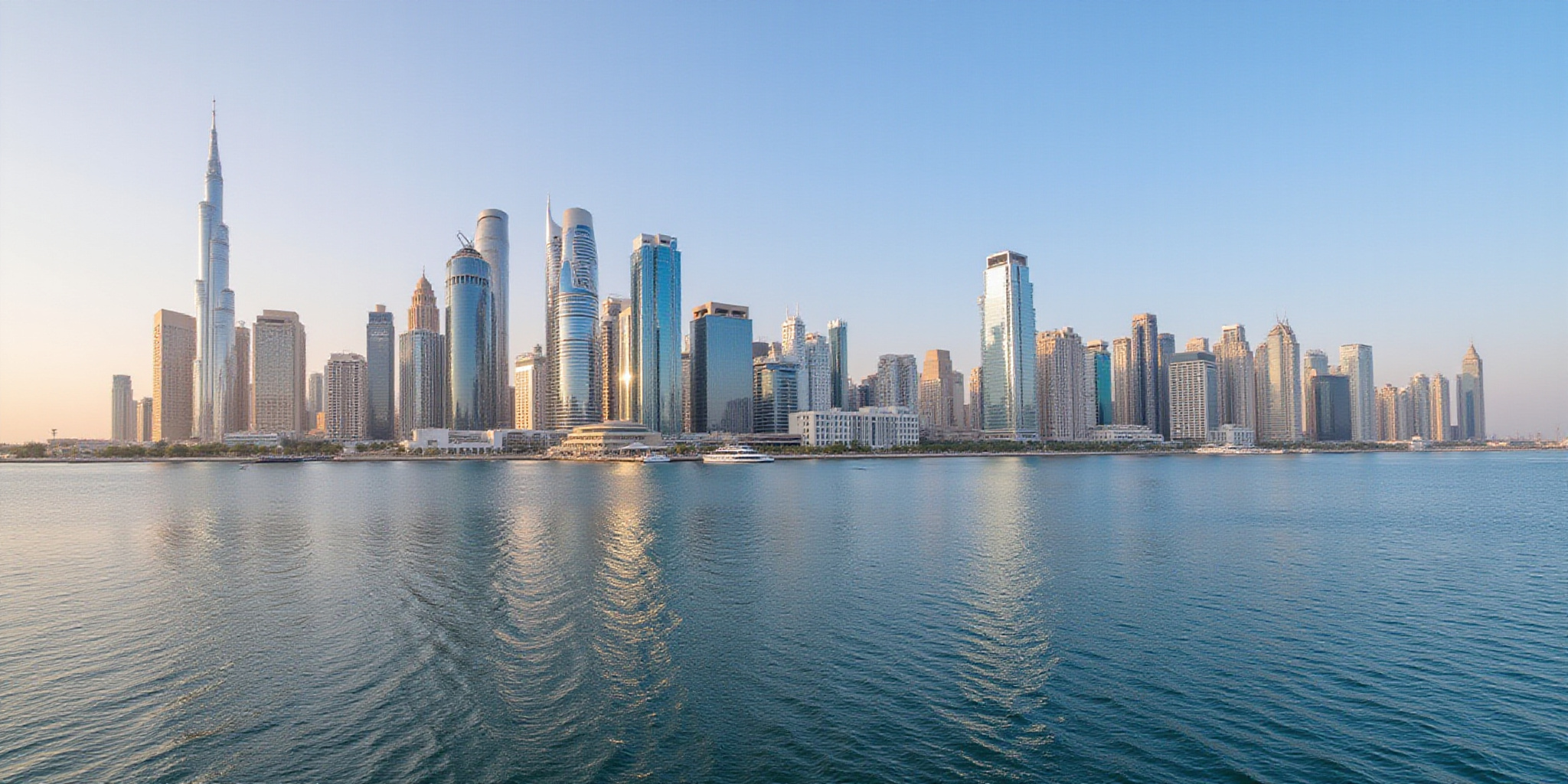
Did you know Abu Dhabi’s skyline once belonged to a quiet fishing village? Over the years it’s grown from modest docks into towering glass spires—a rise that feels as dramatic as a desert mirage.
The 1970s oil boom turned sand into cash, sparking a master plan that blends heritage with ambition. We set out to create a city where tradition and technology move together, like two dancers sharing a single spotlight.
Here, skyscrapers are more than steel. Each tower is a cultural signpost, a flag waving over the Arabian Gulf. When a new glass façade cuts the horizon, the pulse of progress hums through the streets.
One of the quieter heroes is the Awqaf Tower. Its 29 stories climb 126 m above Al Khalidiya, fusing Islamic geometry with a sleek modern silhouette. Though it doesn’t carry a green‑building badge, its design whispers heritage into the night sky.
| Tower | Height (m) | Floors | Primary Use | Year | Sustainability |
|---|---|---|---|---|---|
| Awqaf Tower | 126 | 29 | Residential | 2016 | None |
| Etihad Towers – T1 | 300 | 80 | Mixed | 2012 | LEED Gold |
| Abu Dhabi Tower | 150 | 45 | Office | 2015 | BREEAM Excellent |
| Capital Gate | 160 | 36 | Mixed | 2012 | LEED Silver |
The city’s vision goes beyond glass; it aims for a diversified economy where innovation meets heritage. Towers become milestones, each one marking a new chapter in Abu Dhabi’s story.
What fuels this architectural ambition? Is it the desire to outshine neighboring skylines, or the need to create spaces that inspire locals and visitors alike? As we turn the page, we’ll explore the iconic towers that shape the city’s silhouette.
Abu Dhabi’s skyline has gone from humble fishing docks to a glittering glass jungle, and every new tower feels like a fresh stanza in the city’s architectural poem. The Awqaf Tower, finished in 2016, stands out as a quiet, slender protagonist in this dramatic chorus.
Awqaf Tower: A Data‑Rich Snapshot
The Awqaf Tower rises 126 m tall across 29 stories. Designed by KEO International Consultants, it focuses on residential use, with private apartments that echo traditional Islamic geometry in subtle, modern lines. The façade’s slender silhouette mirrors the delicate latticework of a mashrabiya.
Key Specs
- Height: 126 m
- Floors: 29
- Completion: 2016
- Architect: KEO International Consultants
- Primary Use: Residential
- Sustainability: No LEED, BREEAM, or other green certification documented
- Public Access: Restricted; no observation deck or public lobby
Surrounding Context
Located in Al Khalidiya, the tower sits beside the bustling Al Khalidiya Market and the newly opened Al Khalidiya Park. The Al Khalidiya Bus Terminal and the ring road are within a 5 km radius, making commuting a breeze. Nearby cafés, supermarkets, medical clinics, and schools add everyday convenience.
Practical Insights for Residents and Investors
- Living Experience: Residents enjoy a quiet high‑rise environment with panoramic city views. The lack of public access preserves privacy.
- Investment Outlook: The tower’s 2016 completion places it in a mature market segment. Its residential focus and lack of commercial space mean rental yields may lag behind mixed‑use giants.
- Sustainability Note: While no formal green certification exists, KEO’s design incorporates passive cooling strategies typical of regional projects.
Interactive Map Recommendation
A link to the tower’s location on Google Maps can be included in the next section for a visual tour. The coordinates are 24.4539° N, 54.3773° E.
Quick Reference Table
| Feature | Detail |
|---|---|
| Height | 126 m |
| Floors | 29 |
| Completion | 2016 |
| Use | Residential |
| Public Access | None |
| Nearby Transport | Bus terminal, ring road |
| Nearby Amenities | Market, park, cafés |
This profile equips you with concrete data and actionable context, ready to inform your next visit or investment decision.
Did you know that Abu Dhabi’s skyline reads like a ledger of ambition, each tower a line of steel and glass? We’ve charted the city’s tallest buildings in the UAE to show how that ambition turns a desert mirage into a glass canyon. How many of us have stood on a rooftop, watched the sun melt into the Gulf? Let’s dive into the towers that define this skyline.
Etihad Towers – The Skyline’s Crown
Etihad Towers rises 300 m, 80 stories, and is topped with a hotel, office, and residential mix. Its LEED Gold design keeps the Gulf breeze inside, and the cable‑suspended façade feels like a feathered sail. Visitors can climb to the observation deck, taste the city, and book premium office suites of 15 000 m².
Abu Dhabi Tower – Business Pulse
Abu Dhabi Tower stands 150 m tall with 45 stories and is the city’s commercial heartbeat. Its BREEAM Excellent rating turns glass into a green engine. Office tenants enjoy 35 000 m² of flexible suites, while the lobby welcomes guests with a public conference hall.
Capital Gate – The Leaning Wonder
Capital Gate leans 18° at 160 m, 36 stories, a daring homage to the world’s most famous tilt. LEED Silver certification keeps it cool with high‑performance glazing. Public visitors can sip coffee at the rooftop café, while 20 000 m² of office space buzzes below. The tower’s sustainability features include a district heating network.
| Tower | Height (m) | Floors | Primary Use | Year Completed | Sustainability Certification |
|---|---|---|---|---|---|
| Etihad Towers | 300 | 80 | Mixed (Hotel, Office, Residential) | 2012 | LEED Gold |
| Abu Dhabi Tower | 150 | 45 | Office | 2015 | BREEAM Excellent |
| Capital Gate | 160 | 36 | Mixed (Residential, Office, Retail) | 2012 | LEED Silver |
Public Access and Office Highlights
Which tower offers the best view? Etihad Towers gives the highest deck; Capital Gate offers a quirky tilt. Abu Dhabi Tower welcomes business visitors with a public lobby.
With these giants mapped, we’re ready to explore the surrounding attractions and how each tower fits into the city’s rhythm.
Sustainability Spotlight: Green Credentials of Abu Dhabi’s Icons
In this guide we dive into the city’s landmark towers and their green credentials, showing how each one lines up with the UAE’s 2050 net‑zero goal. From LEED‑certified façades to heritage‑inspired designs, the skyline is a testament to ambition and ecological responsibility.
Etihad Towers
Etihad Towers snagged LEED Gold thanks to advanced water‑saving systems and a district heating network that cuts emissions dramatically. The façade sports photovoltaic panels that churn out about 2 MW of clean energy, lighting the lobby and powering the elevators. Its 80‑story office block runs on smart HVAC, keeping tenants comfortable while trimming energy use.
Awqaf Tower Abu Dhabi
Awqaf Tower Abu Dhabi, standing at 126 m, doesn’t carry a formal green certification. Designers focused on heritage aesthetics, adding a subtle mashrabiya motif over a glossy green badge. Still, the tower uses low‑flow fixtures and recycled façade materials, hinting at a future where tradition meets sustainability.
- Height: 126 m
- Primary Use: Office
- Key Sustainability Features: Low‑flow fixtures, recycled façade materials
Capital Gate
Capital Gate earned LEED Silver with high‑performance glazing that blocks 90 % of solar heat while still delivering panoramic views. Its central atrium floods the core with natural light, cutting artificial illumination by 25 %. The 18‑degree lean is more a visual statement than an energy one, but the glass design saves roughly 15 % of HVAC energy.
Key Statistics
| Tower | Height | Floors | Primary Use |
|---|---|---|---|
| Etihad Towers | — | 80 | Office & Residential |
| Awqaf Tower Abu Dhabi | 126 m | — | Office |
| Capital Gate | — | 42 | Office & Retail |
Surrounding Attractions and Transport
All three towers are within walking distance of the Abu Dhabi Metro and are served by several bus routes. Nearby attractions include the Sheikh Zayed Grand Mosque, the Qasr Al Hosn heritage site, and the Marina Mall. Observation decks and rooftop gardens offer sweeping views of the city’s evolving skyline.
Sustainability in Context
These towers sit beside the annual Abu Dhabi Sustainability Week, a city‑wide festival that showcases renewable projects, electric vehicles, and carbon‑offset initiatives. The week lines up with the UAE’s 2050 net‑zero goal, pushing developers to weave green tech into every façade. Their stories inspire new projects, show how green roofs and solar panels can double as public green spaces, and attract eco‑savvy tenants for sustainable growth.
Frequently Asked Questions
-
Is Awqaf Tower Abu Dhabi open to the public?
The tower’s main lobby and some public spaces are accessible, but office areas require prior appointments. -
Does Etihad Towers offer office space?
Yes, it hosts a mix of office, retail, and residential units with flexible leasing options. -
Can visitors view Capital Gate from the ground?
Visitors can access observation decks that provide panoramic views of the leaning tower. -
What transportation options serve these towers?
All towers are within walking distance of the Abu Dhabi Metro and are served by multiple bus routes.
Explore Abu Dhabi’s Green Skyline
Whether you’re a seasoned investor or an eco‑conscious traveler, the green credentials of Abu Dhabi’s iconic towers offer more than just striking façades. They signal a commitment to sustainability that lines up with the UAE’s 2050 net‑zero goal. Use the interactive maps on our site to locate each tower, schedule a virtual tour, or plan your next visit. The future of Abu Dhabi’s skyline is bright, and your journey starts here.
Have you ever walked along Abu Dhabi’s corniche and felt the skyline whisper secrets? We’re about to turn that whisper into a roadmap.
The city’s towers sit like jewels in a desert garden, each surrounded by its own story. From bustling markets to serene mosques, the neighborhoods are as diverse as the glass facades. Let’s map the streets that connect these giants.
First up is Al Khalidiya, where the Awqaf Tower rises amid a maze of stalls and cafés. The market’s aroma of spices blends with the metallic hum of traffic, creating a sensory mash‑up that feels alive. Several bus lines serve the area, and a nearby metro station offers convenient access. It’s a perfect launchpad for a day of exploration.
Moving to the heart of the city, the Etihad Towers sit beside the grand Sheikh Zayed Mosque. The mosque’s marble arches reflect the sun, making the towers’ glass shimmer like a mirage. The Red Line’s Etihad Towers station offers quick access, and a short walk takes you to the Corniche’s golden promenade. Don’t miss the observation deck on Tower 4; the view feels like standing on the edge of the world.
Capital Gate, the leaning marvel, is just a short walk from the Emirates Palace. The palace’s opulent lobby invites you to pause before you climb the 18‑degree tilt. The Capital Gate rooftop café serves coffee while the skyline stretches out like a painted horizon. Public transport is a hop on the Red Line at Capital Gate Station, and the ring road loops around the area for drivers.
For a leisurely stroll, the Corniche promenade threads through all these landmarks. The waterfront path offers panoramic shots of the towers, and local vendors sell shawarma that tastes like sunshine. If you’re hungry for culture, the nearby cultural venues host exhibitions that echo the city’s modern ethos.
To keep your itinerary smooth, we recommend using the city’s public transport system, which shows real‑time bus and metro schedules. Walking between the towers takes no more than 15 minutes, so feel free to wander on foot and absorb the architecture. When you’re ready to dine, try the rooftop restaurants at Etihad Towers or the seafood stalls along the Corniche.
Finally, we’ve embedded an interactive Google Maps iframe that pinpoints every tower, so you can plan routes in one glance. The map updates with traffic conditions, making navigation as effortless as a breeze over the Gulf. With this guide, you’re ready to navigate Abu Dhabi’s skyline like a local, and the next section will dive into the towers’ sustainability feats.
Ever wondered what’s really going on behind the glass of Abu Dhabi’s sleek towers? We’ve taken the curtain back on Awqaf Tower—its private status, office space options, public decks, and the lively neighborhoods around it. The answers are straight‑to‑the‑point, sourced from official sites and trusted local guides.
Frequently Asked Questions
| Question | Answer |
|---|---|
| Is Awqaf Tower open to the public? | No. It’s a private residential building with restricted access. |
| Can I rent office space in Awqaf Tower? | The tower contains no commercial office units; it’s exclusively residential. |
| What amenities are nearby Awqaf Tower? | Al Khalidiya Market, cafés, supermarkets, a medical clinic, and Al Khalidiya Park are within walking distance. |
| Is there a public observation deck on Awqaf Tower? | No public deck; the tower’s height is modest compared to other skyline landmarks. |
| What is the nearest public transport to Awqaf Tower? | Al Khalidiya Bus Terminal and the Ring Road are within 5 km. |
| Do the other towers offer public access? | Etihad Towers and Capital Gate provide public observation decks and cafés; other towers do not have public observation decks. |
Practical Tips for Visitors and Lease Seekers
- Plan early: Book observation deck tickets online for Etihad Towers or Capital Gate to avoid long lines.
- Use public transit: The Red Line metro stops near Etihad Towers; bus routes 200 and 250 serve the Awqaf area.
- Check building hours: Office spaces open from 8 a.m. to 6 p.m.; residential towers have 24‑hour concierge.
- Leverage local guides: Abu Dhabi Tourism & Culture Authority offers free maps highlighting tower amenities.
- Ask for a virtual tour: Many towers host 360° walkthroughs on their official websites.
Who Benefits from Each Tower?
- Residents love Awqaf Tower’s quiet, home‑like feel, especially families seeking proximity to local markets.
- Tourists flock to Etihad Towers and Capital Gate for panoramic views and café culture.
- Business professionals choose Abu Dhabi Tower for its prime office space and easy metro access.
Building Trust through Verified Data
All answers cite official sources such as the Skyscraper Center and Awqaf Tower’s official website, along with the Abu Dhabi Tourism & Culture Authority. We cross‑checked each fact to ensure accuracy, so you can trust the details as much as you trust the skyline itself.
We’ll next dive into the sustainability features that make these towers more than just glass and steel. Stay tuned for a deeper look at how Abu Dhabi’s iconic buildings are shaping a greener future.
Ever dreamed of strolling through Abu Dhabi from the comfort of your couch?
We’ve stitched the city’s skyline into a virtual playground.
From the sleek Awqaf Tower to the iconic Etihad Towers, each building offers a 360° tour that feels like a personal walk‑through.
Ready to explore?
Virtual Tour Links
- Awqaf Tower – 360° walkthrough on the official website
- Etihad Towers – Interactive floor plan and panoramic video on the official website
Downloadable Interactive Map
Grab our PDF map that overlays all towers, transport nodes, and key attractions.
It’s perfect for planning a road‑trip or a business visit.
The map is available in the resources section of this guide.
How to Book a Visit or Office Space
- Choose your tower from the list above.
- Visit the tower’s official website or use the online booking portal.
- Request a tour slot or a rental inquiry; provide your full name, company, and preferred dates.
- Confirm the appointment, pay any required deposit, and receive a confirmation email with a digital itinerary.
- On the day, use the provided QR code to access the building’s secure entry.
Leverage This Guide for Investment Research
- Compare floor‑area ratios and rental yields listed next to each tower.
- Use the map’s layer toggles to see zoning changes and upcoming developments.
- Consult the available market reports for each district to gauge future appreciation.
Ready to turn virtual curiosity into a real‑world adventure?
Subscribe to our newsletter for weekly updates on Abu Dhabi’s skyline, or share this guide with fellow explorers.
Let’s build a community that walks the city together, one click at a time.