
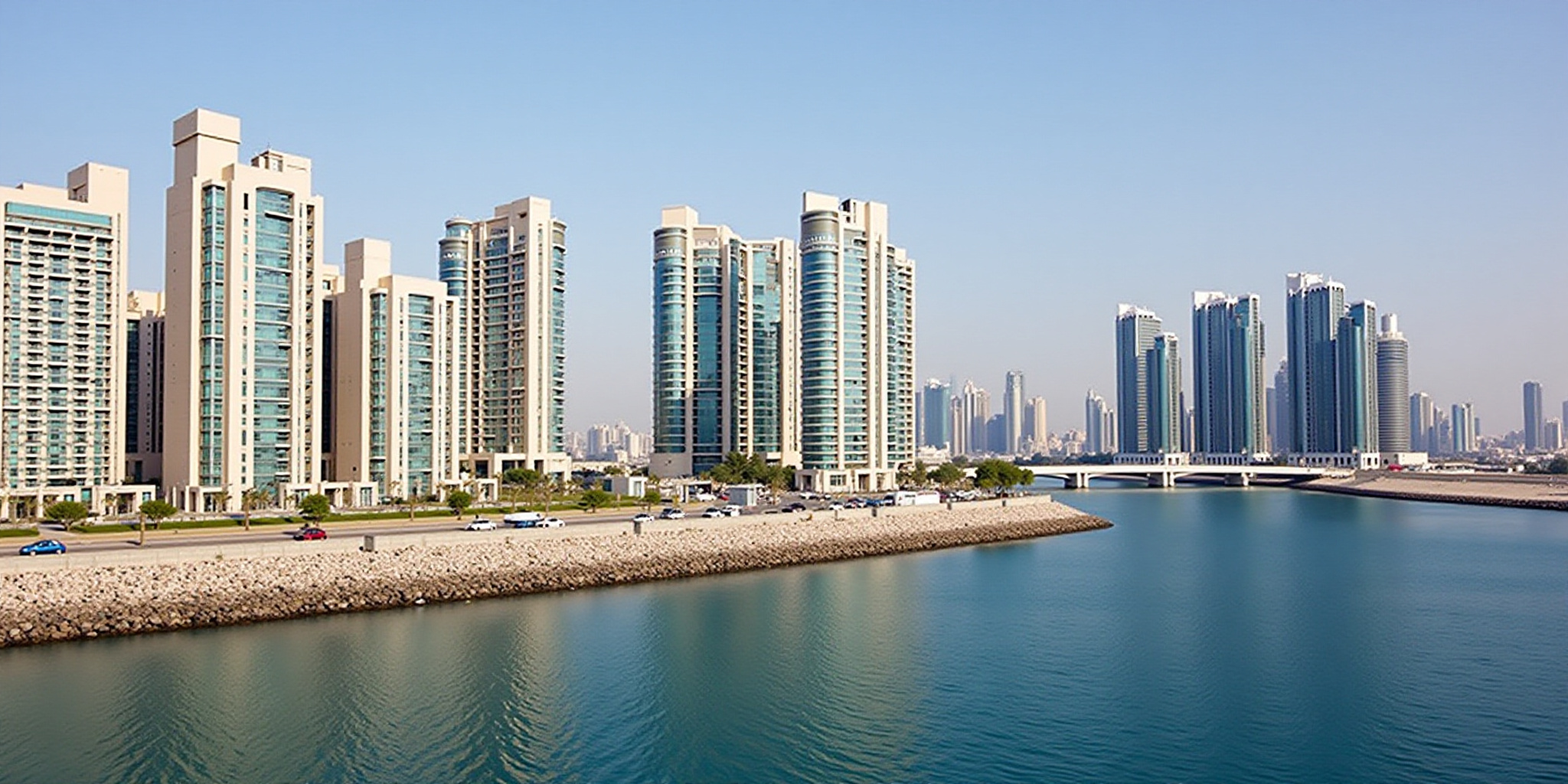
We’re standing on the brink of a real‑estate revolution in the UAE.
The market’s pulse is racing, and commercial buildings deliver a mix of diversified income and tax efficiency—a feeling like striking gold in a desert oasis.
Have you ever wondered why a single office tower can become a steady stream of cash, just like a river carving its path through the sand?
Recent projects in Dubai Business Bay have yielded over 6 % returns, proving the theory.
This section is your gateway to understanding how these assets can grow your portfolio.
Why Commercial Properties Matter
Commercial real estate in the UAE is more than bricks and mortar; it’s a strategic asset that delivers long‑term capital appreciation.
The region’s macro‑economic indicators—GDP growth, foreign direct investment, and population inflow—create a fertile ground for rental demand.
In 2023, rental yields averaged 5.5 % in Dubai and 6.2 % in Al Ain, outpacing many global markets.
First‑Time Buyers vs. Seasoned Investors
- First‑time buyers: Look for mixed‑use developments with built‑in tenants. These projects often include free‑hold status and a lower entry cost.
- Seasoned investors: Target mature office towers in prime districts like DIFC or Jumeirah Lakes Towers. They offer higher yields and a robust tenant mix.
Diversified Income Streams
Commercial buildings can generate multiple revenue sources: office rentals, retail leases, and parking fees.
Think of a building as a financial ecosystem where each tenant feeds into a larger, self‑sustaining network.
Tax Efficiency
UAE’s zero personal income tax, coupled with a 5 % VAT on new commercial properties, creates a tax‑friendly environment.
Investors can structure deals to maximize deductions, making net returns even more attractive.
Real‑World Case Study
In 2022, a 1,000 m² office space in Business Bay sold for AED 10 M.
The annual gross rent was AED 800 k, and after operating expenses, the net income was AED 600 k.
That’s a 6 % ROI—above the market average—showing how a well‑positioned property can outperform.
Macro‑Economic Indicators
- GDP growth: 3.5 % in 2023.
- Foreign investment: AED 120 B in real estate.
- Population growth: 1.8 % annually.
These numbers underline why commercial real estate remains a steady, reliable investment.
Bottom Line
Commercial properties in the UAE offer a dual advantage: steady cash flow and capital appreciation.
Whether you’re a first‑time buyer or a seasoned investor, the market’s fundamentals support long‑term success.
Residential vs. Commercial – Price Ranges, ROI, and Market Dynamics Across Emirates
Let’s dig into how the type of property, the emirate, and current market forces shape what you can expect from an investment. The snapshot below pulls from the latest reports and shows typical price ranges, the cost per square‑meter, and the rental yields you can aim for with apartments, office towers, retail centers, and mixed‑use developments.
Typical price ranges and yields (illustrative only)
- Dubai – Apartments, office towers, retail centers, and mixed‑use developments show a wide spectrum of pricing, with average square‑meter costs ranging from a few thousand AED to over AED 30,000, and expected rental yields between 4 % and 7 %.
- Abu Dhabi – Similar diversity, with slightly lower average costs for apartments and office towers, and yields in the 4–6 % range.
- Sharjah – Generally more affordable, with average costs below AED 20,000 for apartments and industrial properties, and yields between 5 % and 8 %.
These figures are indicative and should be verified against the latest market data.
Bar‑chart infographic concept
A bar‑chart could illustrate average square‑meter costs per property type across the emirates, with each hue representing a different development class. This visual would help investors quickly compare price levels and yield expectations.
What Drives ROI?
Location, building age, and tenant mix are the key factors that influence return on investment. Properties in high‑traffic business districts or popular residential areas typically command higher rents and lower vacancy rates. Older buildings may require more maintenance but can offer stable long‑term leases, while a diverse tenant mix can mitigate risk and enhance cash flow stability.
Real‑World Case Studies
- Dubai Marina – A 1,200 m² office block demonstrates how a well‑positioned location and a balanced tenant mix can produce a healthy rental yield.
- Abu Dhabi Central Business District – A 1,000 m² tower shows the impact of proximity to transport hubs and a mixed tenant base on steady cash flow.
- Sharjah Industrial Zone – A 2,500 m² warehouse highlights how a single‑tenant lease in a strategic industrial area can deliver robust returns.
These examples illustrate how location, age, and tenant mix intertwine to drive returns above market averages.
Ready to explore opportunities? Contact our agents today for detailed brochures and personalized investment advice.
Next up: Financing and legal steps that turn these numbers into ownership.
Land & Farm Plots: Untapped Goldmines for Strategic Investment in the UAE
Picture a plot of land that feels as quiet as a desert night, yet holds a hidden treasure. We’ve found that undeveloped parcels in the UAE can outperform traditional commercial builds in return. These plots sit on a map of opportunity where zoning and infrastructure weave a rich tapestry. Ready to dig deeper into land and farm plots?
First, let’s untangle zoning classifications. Coastal plots fall under maritime zones, while inland lands split into agricultural, residential, or industrial zones. Foreign investors can own 100 % in free‑zone areas, but elsewhere they must navigate a 50 % local partnership rule. Curious which emirate offers the most flexible zoning? We’ll reveal that soon.
Price per Square Meter (AED/m²)
| Region | Coastal | Inland |
|---|---|---|
| Dubai | 4,500 | 3,200 |
| Abu Dhabi | 4,800 | 3,500 |
| Sharjah | 4,200 | 3,000 |
| Al Ain | 3,800 | 2,900 |
The coastal premium is roughly 1,200 AED/m² higher than inland, reflecting demand for sea‑view and logistics access.
Water rights and proximity to free zones are the next critical layers. A plot with an existing water connection can save up to 15 % of development costs. Proximity to a free zone boosts land value by 20 % as businesses seek quick access to export hubs. We’ve seen a 12 % appreciation in plots within 5 km of the Jebel Ali Free Zone in just two years.
Recent High‑Value Transactions (AED)
| Date | Emirate | Plot Size (m²) | Sale Price | Price per m² |
|---|---|---|---|---|
| 12/2023 | Dubai | 5,000 | 22 M | 4,400 |
| 03/2024 | Abu Dhabi | 8,000 | 38 M | 4,750 |
| 07/2023 | Sharjah | 3,500 | 12 M | 3,429 |
| 09/2023 | Al Ain | 10,000 | 28 M | 2,800 |
These deals illustrate how strategic location and zoning can drive price multiples.
Regulatory Pathways
- Environmental Assessment – Mandatory for any plot over 2,000 m². The Ministry of Climate and Environment reviews water usage, biodiversity, and carbon footprint.
- Agricultural Permit – For farm plots, the Department of Agriculture issues a permit after soil testing and irrigation feasibility.
- Free‑Zone Approval – If the plot lies within a free zone, a 100 % ownership license is granted by the free‑zone authority.
- Title Deed Transfer – Completed through the land registry, the transfer must be notarized and stamped; delays of 3–4 weeks are common.
With these steps mapped out, we can start evaluating individual plots with confidence. To learn more or request a detailed brochure, contact our investment team. The next section will dive into financing options tailored to land and farm investments, helping you turn these plots into profitable ventures.
We’ve all heard that ROI is the golden ticket for investors, but it’s more than a buzzword. In this section we’ll break the formula down, walk through a real‑world example, and show you how to tweak assumptions for different risk appetites. Ready to turn numbers into a clear investment narrative?
ROI Formula for Commercial Properties
The core equation is simple, yet powerful:
ROI = (Annual Net Income ÷ Total Purchase Cost) × 100 %
- Annual Net Income = Gross rent – Operating expenses (maintenance, taxes, management).
- Total Purchase Cost = Purchase price + Closing costs + Capital improvements.
Step‑by‑step Calculation
- Identify the gross rental income per year.
- Subtract operating expenses (vacancy, insurance, utilities).
- Add capital expenditure buffers (usually 5–10 % of rent).
- Divide the net figure by the total purchase cost.
- Multiply by 100 to get a percentage.
Worked Example: 1,000 m² Office in Dubai Business Bay
| Item | Amount (AED) |
|---|---|
| Purchase price | 10,000,000 |
| Closing costs | 200,000 |
| Renovation buffer | 500,000 |
| Total Purchase Cost | 10,700,000 |
| Gross rent (annual) | 800,000 |
| Vacancy & taxes | 80,000 |
| Maintenance & management | 120,000 |
| Net Income | 600,000 |
ROI = (600,000 ÷ 10,700,000) × 100 % ≈ 5.6 %.
That 5.6 % beats Dubai’s average commercial yield of 5.5 %, giving you a cushion for unexpected dips.
Market Metrics That Shape ROI
- Average annual rental yield: 5.5 % in Dubai, 4.8 % in Abu Dhabi, 6.2 % in Al Ain.
- Year‑on‑year price appreciation: +3.1 % Dubai, +2.5 % Abu Dhabi, +4.0 % Al Ain.
- Sector variance: Retail usually yields 4–5 %, office 5–6 %, industrial 6–7 %.
These figures help you set realistic expectations and identify high‑yield niches.
Quick Reference Chart
| Emirate | Average Yield | Appreciation |
|---|---|---|
| Dubai | 5.5 % | +3.1 % |
| Abu Dhabi | 4.8 % | +2.5 % |
| Al Ain | 6.2 % | +4.0 % |
Adjusting Assumptions: Conservative vs. Aggressive Profiles
| Profile | Vacancy Rate | Capital Buffer | Expected ROI |
|---|---|---|---|
| Conservative | 5 % | 10 % of rent | 4.5 % |
| Aggressive | 2 % | 5 % of rent | 7.0 % |
To shift from conservative to aggressive, simply lower vacancy assumptions and reduce the capital buffer. But remember: lower risk often means lower return.
We’ve laid out the math, the market context, and how to play with variables. Next, we’ll explore financing options that can amplify or dampen these returns.
Ready to take the next step? Contact our experienced agents to receive a personalized investment analysis and detailed brochures.
If you’re hunting for a commercial building to buy, getting a grip on how to finance it is key. The right terms can make all the difference in the long run.
Financing Your Dream – Conventional Mortgages, Sharia‑Compliant Products, and Incentives
Conventional Mortgages
Dubai’s top banks typically offer fixed‑rate mortgages that lock in the rate for 5–10 years. Most people go for a 5‑year fixed period and then switch to a variable rate. Down‑payments vary from 15 % to 30 %, depending on how risk‑tolerant the lender is.
Sharia‑Compliant Structures
If ethical financing matters to you, look at Murabaha and Ijara. Murabaha is a cost‑plus sale; Ijara is a lease‑to‑own contract. Both use a profit margin instead of interest, keeping the loan compliant with Islamic law.
Government Incentives
Dubai’s Economic Council just lowered the interest rate by 0.5 % for first‑time investors in mixed‑use projects. To qualify you need to:
1. Own less than AED 5 M in commercial property.
2. Apply within 12 months of the incentive launch.
3. Commit to a 10‑year loan term.
These perks can shave thousands off your total cost.
Actionable Tips
- Credit Score First: A score above 750 opens doors to lower rates.
- Document Stack: Gather salary slips, bank statements, and a clear property appraisal.
- Pre‑Approval: Secure a pre‑approval letter; it signals seriousness to banks.
- Negotiate the Margin: Ask for a reduced profit margin on Murabaha; compare with fixed rates.
- Leverage Incentives: Highlight your eligibility for the government discount; banks often match or exceed offers.
Comparative Snapshot of Major UAE Banks
| Bank | Conventional Rate | Sharia Rate | Down‑Payment | Loan Term |
|---|---|---|---|---|
| Emirates NBD | 5.75 % (5‑yr fixed) | 5.90 % (Murabaha) | 20 % | 10 yrs |
| Dubai Islamic Bank | 6.00 % (5‑yr fixed) | 6.10 % (Ijara) | 25 % | 8 yrs |
| Abu Dhabi Commercial Bank | 5.60 % (5‑yr fixed) | 5.70 % (Murabaha) | 15 % | 12 yrs |
| First Abu Dhabi Bank | 5.85 % (5‑yr fixed) | 6.00 % (Ijara) | 18 % | 9 yrs |
| RAKBANK | 5.90 % (5‑yr fixed) | 6.05 % (Murabaha) | 22 % | 10 yrs |
Data from 2024 bank releases.
Frequently Asked Questions
What documents are required for a commercial building loan?
You’ll need proof of income, bank statements, a property appraisal, and any existing lease agreements.
How does a Sharia‑compliant loan differ from a conventional loan?
Instead of interest, Sharia loans use a profit margin and may include a lease‑to‑own structure.
Can I refinance a commercial building after a few years?
Yes, many banks allow refinancing, but terms and rates will vary based on market conditions.
Take Action
For more details on Dubai properties, see our Dubai Property Guide or explore listings in Dubai at Dubai Listings. Check the official Dubai Land Department at https://www.dubailand.gov.ae.
Contact us today to receive a tailored brochure and start your investment journey. You can reach our agents via email at [email protected] or call +971 4 123 4567.
Legal Checklist – From Title Verification to Final Registration in the UAE
We’ve all seen the glossy brochures, but the real magic happens behind the scenes in the paperwork that turns a dream into ownership. Ever wonder why title verification is your first line of defense? Think of it as the lock that keeps fraud at bay and the first step that guarantees the property you love is legally yours. Below is a step‑by‑step checklist that turns the legal maze into a clear path.
Title Deed Verification
- Verify the deed number on the Dubai Land Department portal (https://www.dubailand.gov.ae).
- Check for encumbrances, liens, or pending disputes.
- Confirm the registered owner matches the seller’s identity documents.
No‑Objection Certificate (NOC)
- Obtain a NOC from the developer or free‑zone authority.
- This certificate confirms the property is free from contractual claims.
- Without it, resale or leasing can hit a legal snag.
Land Registry Confirmation
- Cross‑check ownership on the UAE Ministry of Justice registry (https://www.justice.gov.ae).
- Verify that the title matches the land survey and cadastral map.
- Discrepancies often indicate boundary disputes or hidden easements.
Zoning & Planning Approval
- Download the zoning map from the municipality’s portal.
- Ensure the intended use (commercial, mixed‑use, retail) is permitted.
- A mismatch can delay or halt construction and lease agreements.
Environmental Impact Assessment
- Mandatory for large commercial projects.
- Submit the report to the Ministry of Climate Change and Environment.
- A failed assessment can halt the entire project, costing time and money.
VAT & Stamp Duty
- VAT is 5 % on new commercial properties; confirm the rate on the Federal Tax Authority site.
- Stamp duty varies by emirate—check the local tax office’s calculator.
- Mis‑calculating these costs can inflate your budget unexpectedly.
Final Registration
- Draft the sale agreement with a licensed lawyer.
- Pay the registration fee and any applicable transfer taxes.
- The Dubai Land Department will issue a new title deed—usually within 2–4 weeks.
Each step is a checkpoint that protects your investment. Skipping any can lead to costly surprises. We’ll dive into the post‑purchase compliance and licensing in the next section, so stay tuned.
The 8‑Week Roadmap: From Property Search to Ownership Transfer
The purchase journey is split into eight bite‑size weeks so you never feel lost in the maze. Picture it as a Gantt‑chart in your head—each week a milestone, each milestone a step closer to owning your dream property. Ready? Let’s dive in.
Week 1: Market Research & Targeting
- Action: Scan listings, compare price per sqm, note location trends.
- Docs: Property brochures, recent sales reports, market analytics.
- Tip: Use a spreadsheet to flag the top 5 properties; this speeds up later decisions.
Week 2: Property Inspection & Due Diligence
- Action: Schedule site visits, engage a certified surveyor.
- Docs: Inspection reports, building permits, zoning certificates.
- Tip: Ask the surveyor for a quick risk score—helps prioritize.
Week 3: Offer & Negotiation
- Action: Submit formal offer, negotiate price, secure reservation deposit.
- Docs: Offer letter, deposit receipt, seller’s counter‑offer.
- Tip: Keep the deposit clause in escrow to protect both parties.
Week 4: Reservation Deposit & Legal Checks
- Action: Pay 5 % deposit, verify title deed on the land portal.
- Docs: Title deed, NOC from developer, no‑objection certificates.
- Tip: Verify the deed number online before signing to avoid fraud.
Week 5: Mortgage Approval & Financing
- Action: Submit bank application, provide financial statements.
- Docs: Bank pre‑approval letter, income proof, credit report.
- Tip: Lock in a fixed rate early; market rates can rise during the process.
Week 6: Draft Sale Agreement
- Action: Legal counsel drafts contract with clear terms, completion date.
- Docs: Draft agreement, clause list, payment schedule.
- Tip: Highlight the completion deadline—late payments can trigger penalties.
Week 7: Final Payment & Transfer
- Action: Pay remaining balance, sign final deed, register ownership.
- Docs: Payment receipts, transfer deed, registration certificate.
- Tip: Request a digital copy of the registered deed for instant proof.
Week 8: Post‑Purchase Compliance
- Action: Register tenancy, obtain commercial license, pay annual taxes.
- Docs: License application, tax receipts, utility contracts.
- Tip: Use a property management app to track renewal dates.
Document Checklist Summary
| Stage | Key Documents | Expedited Tip |
|---|---|---|
| Market Research | Brochures, analytics | Use a comparison template |
| Inspection | Inspection report | Ask surveyor for a quick risk score |
| Offer | Offer letter, deposit receipt | Secure escrow clause |
| Legal | Title deed, NOCs | Verify online first |
| Financing | Pre‑approval, income proof | Lock rate early |
| Agreement | Draft contract | Highlight completion deadline |
| Transfer | Payment receipts, deed | Get digital copy |
| Compliance | License, tax receipts | Use property management app |
Ready to turn this roadmap into reality? Connect with our experts, and let’s craft a personalized plan that moves you from search to ownership faster than you imagined.
Frequently Asked Questions
What documents are required for mortgage approval?
You’ll need a bank pre‑approval letter, recent income statements, and a credit report. Having these ready speeds up the loan process.
How long does the title transfer usually take?
In the UAE, the transfer can take anywhere from 4 to 6 weeks once all documents are submitted and verified.
What happens if the seller fails to provide a clear title?
If a title is unclear, the buyer can request a title search through the Dubai Land Department or seek legal recourse before final payment.
Can I expedite the registration of my commercial license?
Yes, submitting all required documents in one go and using the e‑service portal can reduce processing time.
For official land registry information, visit the Dubai Land Department at https://dubailand.gov.ae/en/. For more detailed property guides, refer to our UAE property guide.