
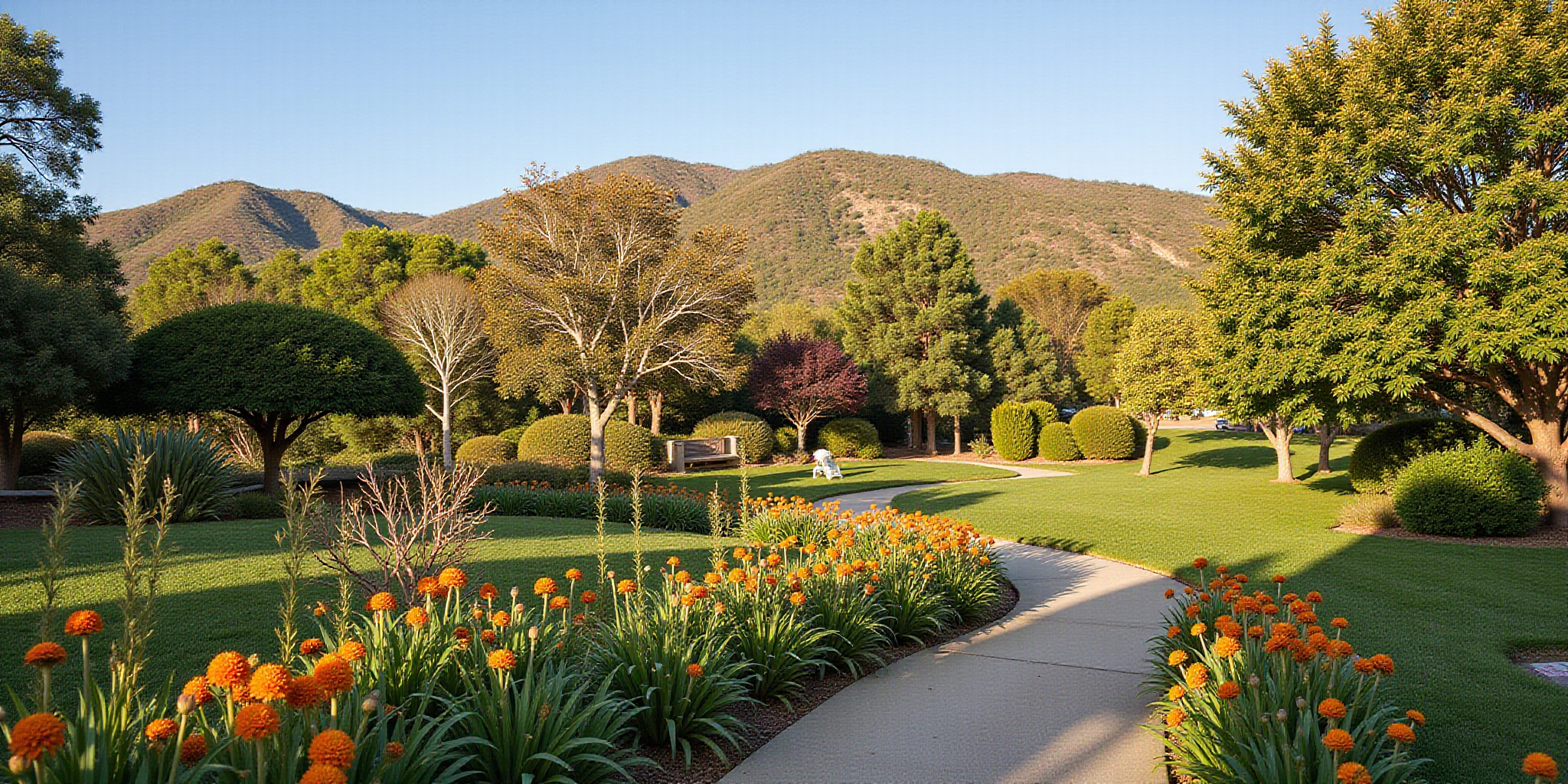
The sun in Topanga Damac Hills blazes like a gold coin on the horizon, yet the area is famous for its green oases.
We’ve seen gardens that look like rainforests, even though the rainfall is a trickle.
Why? Because the right plants, paired with smart design, can thrive in this harsh climate.
In this guide we’ll show you how to turn the desert into a living canvas.
Ready to grow something extraordinary?
Damac Hills sits in a tropical desert zone, where scorching summers reach 42 °C and a brief, damp winter offers a fleeting green window.
The soil is sandy loam, slightly alkaline, and drains quickly.
These conditions demand drought‑tolerant, heat‑resistant species.
We’ll dive into the climate data, soil nuances, and how they shape planting decisions.
Understanding the numbers lets you pick the plants that will not just survive, but flourish.
Our roadmap covers four pillars: a detailed climate analysis, exhaustive plant profiles, practical design concepts, and a vetted supplier network.
For each species, we’ll give you care tips, planting seasons, and maintenance tricks.
We’ll also share layout ideas that fit villas, parks, and commercial fronts, all while staying within local environmental standards.
We’ll even include a downloadable planting calendar to keep you on schedule.
Think of this as your personal playbook for desert‑friendly landscaping.
Imagine turning a barren plot into a thriving oasis that attracts birds, cools the microclimate, and feels like a private retreat.
With the right choices, your garden can meet the UAE’s strict sustainability guidelines.
We’ll walk you through compliance steps, from choosing native species to using solar‑powered irrigation.
You’ll finish with a clear, actionable plan to transform arid spaces into vibrant, resilient landscapes.
We’re not just giving theory; we’re sharing real projects from the community.
Last year, a resident in Damac Hills installed an Albizia tree and a Juniper hedge that now provide shade for a playground.
The results? Lower cooling costs and a 30 % increase in local biodiversity.
Let’s explore how you can replicate that success.
Climate & Soil Foundations of Damac Hills
Damac Hills sits in the UAE’s arid desert climate, where scorching heat and scarce rainfall shape every garden. Still, with the right plants and soil care, gardens can flourish.
The summer can hit about 42 °C, while the winter stays mild and relatively dry. These swings tell you when to plant, how to water, and which species will thrive.
Most of the soil here is sandy loam that drains well. It sits just above a compacted sub‑soil, giving roots a firm foundation without soaking up too much water.
The pH hovers between 6.5 and 7.5, a touch alkaline, and the organic matter sits at 1–2 %. Nutrients can be leached quickly, so extra care is often needed to keep plants lush.
A soil test every two years is our go‑to. Grab a kit, mix 200 g of soil, and follow the lab’s instructions. The results will tell you the pH, nutrients, and texture.
If the test shows low organic matter, sprinkle compost or bio‑char at 5 % by weight before planting. That creates a sponge that holds moisture and nutrients.
Drainage matters. French drains or gravel layers keep excess water from pooling. A well‑drained bed is like a highway for roots, stopping rot and encouraging deep growth.
The soil is the silent partner behind every plant. By testing, amending, and respecting its character, you set up gardens that endure and thrive, even under the harshest sun.
Seasonal planting is a simple strategy: sow seeds in late winter (January–February) so roots grow when it’s cooler, then transplant in early spring before the heat peaks. Water deeply every 3–4 days during the first month, then taper to weekly once seedlings settle.
Sustainability comes from layering: mulch, compost, and native plants that need minimal irrigation. Add drought‑tolerant groundcovers like sedum, and use rain barrels to capture rare downpours. This keeps the garden moist during dry spells.
When you test soil, note the texture code: 1 for sandy, 2 for loamy, 3 for clayey. In Damac Hills, most samples fall into category 1, meaning fast drainage but low retention. Add organic amendments to shift toward 2, which balances moisture and support.
Finally, keep a soil diary. Log pH shifts, plant responses, and weather events. Over time, that record becomes a valuable reference, guiding you to tweak amendments and planting schedules with precision—like a gardener’s crystal ball.
These insights turn desert soil into thriving gardens.
Welcome to the heart of topanga damac hills, where the heat feels like a warm blanket, yet the trees whisper resilience.
The region has an arid climate with mild winters and scorching summers, making it a perfect spot for heat‑tolerant species. Discover how the most popular trees do well here and find out how to care for them.
Albizia lebbeck – Lady Tree
Albizia lebbeck thrives in topanga damac hills because it can handle low rainfall and the heat.
It’s a fast‑growing tree that can reach 8–12 m in a decade and spreads a broad canopy.
Prune it every year to keep its size in check, and mulch 5 cm to lock in moisture.
Plant it in late winter (January–February) for best root establishment.
Leaves may develop fungal spots during humid spells; a fungicide spray helps.
Water it weekly during growth, then reduce to every 10–14 days in winter.
Care checklist
- Prune yearly
- Mulch 5 cm
- Water weekly
- Inspect for fungi
Request a free soil test to receive accurate results and tailor your care.
Juniperus spp. (Juniper)
Junipers show that conifers can survive desert heat.
They thrive in full sun, tolerating temperatures up to 50 °C.
The conical shape grows 3–6 m tall, providing year‑round privacy.
Prune lightly to maintain shape; mulch retains moisture.
Plant in early spring or late autumn for optimal establishment.
Scale insects and spider mites may appear; insecticidal soap combats them.
Water deeply during growth, then reduce to biweekly in winter.
Care checklist
- Prune to shape
- Mulch 5 cm
- Water deeply
- Check for pests
Schedule a free soil test to ensure your Juniper thrives.
Supplier Directory
For delivery options and supplier contact information, visit our partner nursery page or contact your local nursery for the best selection of trees and shrubs in Damac Hills.
Downloadable Resources
You can download our planting calendar for the year to plan your planting and maintenance schedule.
Shrub Showcases: Aquilegia, Artesia, and More
In the heart of Topanga Damac Hills, shrubs can turn heat into art. We’ve seen aquilegia bloom like tiny fireflies against a desert backdrop. Artesia water lilies float like silver moons in ponds that survive the scorching sun. These plants are more than decoration; they’re allies in a climate that loves resilience.
Aquilegia prefers cooler microclimates but tolerates brief winter chill. We plant it in January to give roots a full season. Artesia thrives in a well‑drained pond, absorbing summer heat like a sponge.
Aquilegia grows 30–50 cm tall, spreading soft, nodding blooms. Artesia’s floating leaves can cover up to 2 m², creating a living canopy.
We mulch around both with organic compost, keeping soil cool and moist. Prune Aquilegia after flowering to keep it tidy; cut Artesia stems to control size. A 5 cm mulch layer keeps roots from overheating.
Common pests include aphids on Aquilegia and algae in Artesia ponds. We use neem oil for aphids and a bioremediation tablet for algae. These treatments keep plants healthy without harsh chemicals.
When paired with Albizia or Juniper, these shrubs add texture and color. Albizia’s airy canopy frames Aquilegia’s delicate petals, while Artesia’s water mirrors Juniper’s evergreen silhouette.
Here’s a quick reference:
| Plant | Ideal Soil | Watering | Pruning | Pest Control |
|---|---|---|---|---|
| Aquilegia | Light, well‑drained | Weekly in growth | After bloom | Neem oil |
| Artesia | Pond, alkaline | Maintain level | Trim stems | Algae tablet |
Try a drip irrigation system with a timer; it saves water and keeps the pond level steady.
Ready to mix these shrubs into your desert garden? Let’s dive deeper into design next.
Did you know the desert can be a canvas?
In Topanga Damac Hills, a single tree can shade a patio, a shrub can soften a wall, and a well‑placed lawn can feel like a green oasis.
We’ve seen before‑and‑after transformations that turn barren lots into thriving, low‑maintenance retreats.
Let’s break down how to design for homes, parks, and commercial fronts.
Landscape Design Ideas for Homes, Parks, and Commercial Spaces
Residential Villas
We start with windbreaks: line the longest side of your yard with Albizia lebbeck or Juniperus.
Albizia lebbeck, native to the Topanga Damac Hills region, thrives in the arid climate.
Plant them 4–5 meters apart to create a natural barrier against gusts.
Next, add a privacy screen of Artemisia shrubs spaced 1–1.5 meters apart; this gives a living wall that cools the air.
Finish with a low‑maintenance lawn of Zoysia or Bermuda grass, laid out in a 2‑meter grid to keep watering simple.
Sketches illustrating plant placement are included in the accompanying gallery.
Seasonal color palette: warm apricot blooms in spring, deep burgundy leaves in fall, and subtle sage in winter.
Before‑and‑after photos show a 30‑meter strip of bare sand transformed into a 1‑meter‑wide, fragrant windbreak and privacy zone.
Community Parks
For parks, we layer shade trees, walking paths, and native shrub borders.
Plant Albizia 6 meters apart for canopy, and line the path with Aquilegia spaced 0.8 meters apart; this gives color and attracts pollinators.
Use Artemisia as a border at 1.2 meters spacing to keep the space tidy.
Incorporate a rain‑catchment basin that feeds a small Artesia pond.
Sketches illustrating plant placement are included in the accompanying gallery.
Plant spacing guidelines: Trees 6‑8 meters apart, shrubs 1–1.5 meters, and perennials 0.5 meters.
The before‑and‑after example shows a 5‑meter‑wide walkway turning from cracked concrete into a living corridor.
Commercial Fronts
Commercial spaces demand eye‑catching façades.
Use Albizia as a vertical windbreak, spaced 5 meters apart, and combine with Juniper hedges at 1.5 meters for a tidy border.
Add Artemisia in planter boxes for a low‑maintenance splash of color.
Install a drip‑irrigation system that runs underground, keeping the look clean.
Sketches illustrating plant placement are included in the accompanying gallery.
Seasonal palette: Bright lime in spring, golden yellow in summer, muted terracotta in autumn, and cool gray in winter.
A before‑and‑after case study shows a dull storefront becoming a vibrant, sustainable green corridor.
We’ll dive into irrigation strategies next, exploring how solar‑powered drip lines and smart sensors keep water usage low while keeping plants healthy.
Choosing the right supplier feels like picking a compass for your garden; it has to point true north in quality, service, and value.
In Damac Hills, where heat and wind test every plant, we’ve hand‑picked nurseries that deliver fresh stock and reliable logistics. Let’s unpack what makes a supplier trustworthy…
First, plant availability matters. A nursery that stocks Albizia, Juniper, and desert‑friendly shrubs keeps your project on schedule. We’ve seen villas that ran out of Aquilegia mid‑season because the supplier couldn’t replenish quickly. Availability equals peace of mind.
Next, delivery reliability is key. In a region where a 3‑hour delay can mean the difference between a thriving tree and a wilted sapling, choose partners with proven on‑time records. Many local nurseries offer real‑time GPS tracking and weather‑adjusted routing.
Post‑purchase support is the safety net. A nursery that offers free soil‑testing, maintenance tips, or a quick call line for pest questions turns a one‑time sale into a long‑term partnership. We’ve chatted with a manager who sends a soil‑test kit on the same day you place an order.
Our vetted directory below lists nurseries with contact details, delivery zones, and free soil‑test offers. The table also shows average delivery time, so you can plan your planting calendar accordingly.
| Nursery | Contact | Delivery | Free Soil Test | Avg. Delivery |
|---|---|---|---|---|
| Hala Plants | Website / Phone | Local & UAE‑wide | Yes (online request) | 48 hrs |
| Dubai Garden Centre | Website / Phone | UAE-wide | No | 72 hrs |
| Al Jazeera Nursery | Website / Phone | Local | Yes (in‑store) | 24 hrs |
Case study: A boutique villa in Damac Hills ordered 12 Albizia trees from Hala Plants. They received the shipment within 48 hours, used the free soil‑test kit, and adjusted the pH from 7.2 to 6.8. The trees now thrive, and the owner reports a 30% drop in irrigation costs.
Free soil testing is your secret weapon. It tells you the exact pH, nutrient levels, and potential contaminants, allowing you to tailor amendments and irrigation schedules. Most nurseries provide the kit and a quick analysis report within 24 hours.
Ready to request a free soil test or consultation? Contact the nurseries via their website or phone number listed. Let the experts guide you. Your garden deserves the best start, and we’re here to help you choose the right partner. Next, we’ll explore how to interpret soil‑test results…
We’ve watched the desert bloom in Damac Hills, turning grit into green.
The climate here is a paradox: scorching summer heat meets a brief, moist winter that plants love.
That brief window is all we get to grow lush greenery.
Our guide shows you how to make the most of it.
Supplier Directory
- Damac Nursery – Provides a wide selection of native and desert‑friendly plants, free soil‑testing services, and reliable delivery throughout the area.
- Al‑Mansour Garden Supplies – Focuses on tree and shrub species suited to the UAE desert climate, with flexible delivery options.
- Green Horizon Landscaping – Supplies bulk plant orders, custom planting plans, and post‑planting maintenance support.
(For detailed contact information and delivery options, please visit each supplier’s website or call their local office.)
Plant Profile: Albizia lebbeck
topanga damac hills is a popular choice for its shade and ornamental value.
Albizia lebbeck thrives in well‑drained soils and can tolerate the hot summers of Damac Hills.
Water deeply once a week during the growing season, then reduce to every 10–14 days in winter.
Use insecticidal soap to control scale insects and spider mites, and add compost or bio‑char to improve drought tolerance.
FAQ, Planting Calendar, and Next Steps
Frequently Asked Questions
- How often should I water my Albizia lebbeck? We water deeply once a week during growth, then every 10–14 days in winter.
- What pests threaten Juniperus? Scale insects and spider mites; use insecticidal soap if needed.
- When is the best time to plant Aquilegia? Early spring (January–February) gives roots a full growing season.
- Can I grow Artesia in the desert? Yes, if you have a pond or irrigation system.
- Which mulch keeps moisture? Organic mulch like compost or bark, 5–7 cm deep.
- How can I adjust watering during extreme heat? Reduce frequency but increase depth to encourage deep roots.
- What soil amendment boosts drought tolerance? Add bio‑char or compost to improve water retention.
- How far should I space shrubs? 60–90 cm apart for optimal airflow and growth.
Downloadable Planting Calendar
The planting calendar aligns with Damac Hills’ seasonal rhythms, marking optimal planting months for trees, shrubs, and lawns. Download the planting calendar from our website. The calendar lists planting dates for each month and notes on watering frequency. Print it or save it to your phone.
Next Steps
- Schedule a soil test with a trusted local nursery.
- Choose a supplier that offers free soil‑testing services and reliable delivery.
- Begin planting during the recommended window—typically late winter to early spring.
- Review the calendar before planting.
- Apply mulch after planting.
- Track progress with a garden journal.
Remember to check the weather forecast before planting; a sudden heatwave can shift your schedule.
We’ve packed this guide with every detail you’ll need, from soil science to supplier contacts. We invite you to receive your thoughts so we can keep it sharp and useful.
This guide pulls together climate data, soil tests, species profiles, supplier contacts, and a calendar into one resource. Use it whenever you plan a new project.
Drop us a line with your feedback—your insights help us keep the guide fresh and useful.
Ready to turn your plot into a living masterpiece? Let’s plant tomorrow, starting with a simple soil test today.
Let’s make your garden thrive, one season at a time.