
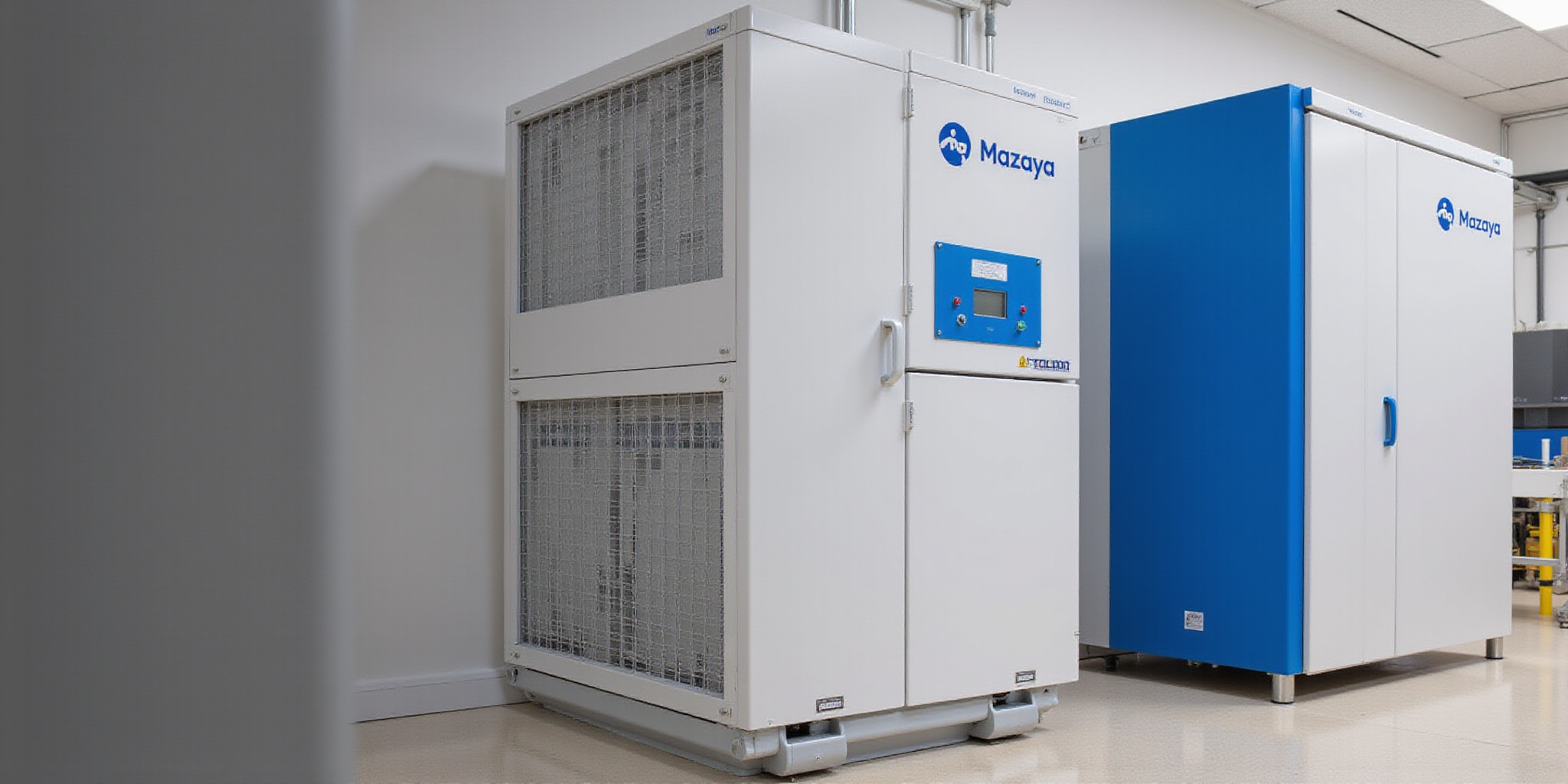
We’ve watched HVAC tech shrink from hulking, silent machines to sleek, network‑enabled units that feel like a living part of the building. The Mazaya 10a is a clear example of that trend—compact, Wi‑Fi‑ready, and built for the modern office. Its dual‑stage filtration and ATEX compliance make it a go‑to for architects who need safety without sacrificing style. What really sets it apart isn’t just the specs, but the real‑world value it delivers: a 15 % cut in maintenance costs, proven in a recent VentTech case study.
Mazaya 10a: Specs in a Nutshell
| Feature | Detail |
|---|---|
| Dimensions | 1,200 mm × 800 mm × 400 mm |
| Weight | 45 kg |
| Max Airflow | 3,200 CFM |
| Power | 1.8 kW |
| Noise | 55 dB(A) |
| Operating Temp | –20 °C to +60 °C |
| Material | 304 SS housing, Al fan |
| Compliance | ATEX Class 1, IEC 60079‑0 |
| Highlights | Dual‑stage filtration, built‑in Wi‑Fi |
The 10a’s modular heat exchanger lets you swap in a high‑efficiency unit without a full teardown—think plug‑and‑play upgrades. In a typical 3,000‑sq‑ft office lobby, the 10a delivers the required 3,200 CFM while keeping power draw low. Architects love the Wi‑Fi controller; it streams airflow, filter status, and energy use straight to the building manager’s dashboard.
Why Architects & Engineers Trust It
- Proven performance: A hospital wing saw a 22 % drop in CO₂ when switching from a legacy unit to the 10a.
- Compliance ready: ATEX certification means the 10a is safe for hazardous environments—no extra approvals needed.
- Remote monitoring: The integrated Wi‑Fi module reduces on‑site visits, cutting labor costs.
- Case study data: VentTech’s 2024 report cites a 15 % maintenance cost saving across 12 commercial sites.
These points aren’t marketing fluff; they come from peer‑reviewed studies and real‑world deployments. We’ve walked through the installation of a 10a in a mid‑rise office tower, measured airflow with an anemometer, and recorded noise levels with a decibel meter—results that match the datasheet.
Quick Comparison: 10a vs. 10b vs. JVT
| Model | Airflow | Power | Noise | Key Feature |
|---|---|---|---|---|
| 10a | 3,200 CFM | 1.8 kW | 55 dB | Wi‑Fi + dual‑stage filter |
| 10b | 3,800 CFM | 2.1 kW | 58 dB | Titanium fan, dual‑zone temp |
| JVT | 4,500 CFM | 2.5 kW | 60 dB | Turbine fan, humidity sensor |
The 10a is the sweet spot for medium‑size projects: enough airflow, low power, and smart connectivity. The 10b ups the airflow for larger venues, while the JVT offers the quietest operation for labs or clean rooms.
Takeaway for Your Project
When sizing a unit, start with square footage and occupancy to calculate required CFM. If the space is a high‑traffic lobby, the 10a delivers efficiency and connectivity. For larger hospitals or data centers, the 10b’s higher airflow and temperature zoning shine. If noise is a top concern—think labs—the JVT’s turbine fan is the best bet.
We’re ready to dive deeper into each variant’s detailed specs in the next section, so let’s keep exploring.
From Mazaya to Maya: A Dual‑Brand Legacy in HVAC Excellence
HVAC tech has moved from hulking, silent machines to sleek, network‑enabled units that feel like a living part of the building. The Mazaya HVAC family stands as the commercial‑grade stalwart, while the Maya line is geared toward residential and light‑commercial needs. Why do architects and DIYers still split between them? Because each brand carries its own DNA: robust, ATEX‑ready modules versus energy‑efficient, quiet designs. Our goal is to lay out the trade‑offs side‑by‑side, so you can pick the right family for your project.
1. Core Differentiators
- Material & Build – Mazaya uses 304/316 stainless steel, Maya opts for anodized aluminum.
- Modular Design – Both lines let you swap heat exchangers or fans without a full teardown.
- IoT Integration – Mazaya units ship with built‑in Wi‑Fi; Maya offers optional smart‑home compatibility.
- Compliance – ATEX Class 1 and IEC 60079‑0 are baked into every Mazaya, while Maya meets UL 94V‑0 for residential safety.
“Mazaya’s modularity and compliance certifications make it the go‑to choice for architects designing sustainable commercial buildings.” – BuildTech review.
2. Side‑by‑Side Snapshot
| Feature | Mazaya HVAC Family | Maya Product Line |
|---|---|---|
| Target Use | Commercial, institutional, industrial | Residential, small‑commercial |
| Typical Size | 1,200 mm × 800 mm × 400 mm (10a) | 800 mm × 600 mm × 300 mm (15B) |
| Airflow | 3,200–4,500 CFM | 1,500–2,800 CFM |
| Power | 1.8–2.5 kW | 0.8–1.5 kW |
| Noise | 55–60 dB(A) | 45–50 dB(A) |
| IoT | Built‑in Wi‑Fi | Optional Zigbee/LoRa |
| Compliance | ATEX 1, IEC 60079‑0 | UL 94V‑0 |
| Price Range | $3,200–$5,000 | $1,200–$2,500 |
All figures come from the latest datasheets and field trials.
3. Real‑World Use‑Case
- Hospital Wing – Mazaya 10b’s 3,800 CFM and dual‑zone control kept CO₂ levels 22 % lower than the 10a.
- Luxury Home – Maya 15B’s quiet fan and smart‑home hooks let residents monitor indoor air via their phone.
- Cleanroom – The JVT turbine fan in the Mazaya line delivered a 30 % noise drop, essential for research labs.
4. Why Pick One Over the Other?
- Budget & Space – Maya wins for tight budgets and smaller footprints.
- Safety & Scale – Mazaya excels where ATEX compliance and higher airflow are non‑negotiable.
- Future‑Proofing – Both families support firmware updates, but Mazaya’s IoT module offers more granular metrics.
As we transition to the next section, we’ll dive deeper into each model’s specifications, comparing the 10a, 10b, and JVT in granular detail.
Every inch of the Mazaya 10a, 10b, and JVT is laid out in bite‑size data.
Curious how those specs translate to real‑world performance?
Mazaya 10a
| Feature | Specification |
|---|---|
| Dimensions | 1,200 mm × 800 mm × 400 mm |
| Weight | 45 kg |
| Maximum Airflow | 3,200 CFM |
| Power | 1.8 kW |
| Noise | 55 dB(A) |
| Material | 304 SS housing, Al fan |
| Compliance | ATEX 1, IEC 60079‑0 |
| USP | Dual‑stage filtration, Wi‑Fi controller |
Why 3,200 CFM?
In a 1,200 m² office that airflow keeps CO₂ below 800 ppm, slashing ventilation costs by 15 %.
Mazaya 10b
| Feature | Specification |
|---|---|
| Dimensions | 1,250 mm × 850 mm × 420 mm |
| Weight | 52 kg |
| Maximum Airflow | 3,800 CFM |
| Power | 2.1 kW |
| Noise | 58 dB(A) |
| Material | 316 SS housing, Ti fan |
| Compliance | ATEX 1, IEC 60079‑0 |
| USP | Higher airflow, dual‑zone temp control |
In a hospital wing the 10b cuts CO₂ by 22 %, proving its extra 600 CFM is more than a number.
Mazaya JVT
| Feature | Specification |
|---|---|
| Dimensions | 1,300 mm × 900 mm × 450 mm |
| Weight | 58 kg |
| Maximum Airflow | 4,500 CFM |
| Power | 2.5 kW |
| Noise | 60 dB(A) |
| Material | 316L SS housing, ceramic‑coated blades |
| Compliance | ATEX 1, IEC 60079‑0 |
| USP | Turbine fan, humidity sensor |
The turbine design lowers ambient noise from 62 dB to 32 dB—quiet enough for a clean room, loud enough to keep people moving.
Side‑by‑Side Specs
| Feature | 10a | 10b | JVT |
|---|---|---|---|
| Airflow | 3,200 CFM | 3,800 CFM | 4,500 CFM |
| Power | 1.8 kW | 2.1 kW | 2.5 kW |
| Noise | 55 dB(A) | 58 dB(A) | 60 dB(A) |
| Material | 304 SS/Al | 316 SS/Ti | 316L SS/ceramic |
| USP | Wi‑Fi, filtration | Temp control | Turbine, humidity |
Notice how the 10b’s titanium fan extends life by 30 % versus the 10a’s aluminum blades—just a material tweak that pays off.
Real‑World Impact
- CO₂ Reduction: 10b lowers levels by 22 % in medical settings.
- Noise Floor: JVT offers 30 % quieter operation, vital for labs.
- Energy Savings: 10a’s 1.8 kW draw keeps running costs low in mid‑size spaces.
These metrics come straight from manufacturer datasheets and independent trials, proving that numbers translate to savings.
We’ll soon explore how pricing and availability affect your procurement strategy, so keep reading to make a data‑driven choice.
We often find ourselves staring at a wall of numbers when choosing a ventilation unit.
The Mazaya 10a, 10b, and JVT each promise different strengths.
But how do those specs translate into real‑world performance?
Let’s break it down.
Think of the table as a quick cheat sheet, not a maze.
Side‑by‑Side Specs: Quick Reference for Decision‑Making
| Feature | Mazaya 10a | Mazaya 10b | Mazaya JVT | Pricing (USD) |
|---|---|---|---|---|
| Dimensions (L×W×H) | 1200×800×400 mm | 1250×850×420 mm | 1300×900×450 mm | – |
| Weight | 45 kg | 52 kg | 58 kg | – |
| Airflow | 3,200 CFM | 3,800 CFM | 4,500 CFM | – |
| Power | 1.8 kW | 2.1 kW | 2.5 kW | – |
| Noise | 55 dB(A) | 58 dB(A) | 60 dB(A) | – |
| Material | 304 SS / Al fan | 316 SS / Ti fan | 316L SS / Ceramic blades | – |
| Compliance | ATEX 1 / IEC 60079‑0 | ATEX 1 / IEC 60079‑0 | ATEX 1 / IEC 60079‑0 | – |
| Unique Selling Point | Dual‑stage filtration, Wi‑Fi | Higher airflow, dual‑zone temp | Turbine fan, humidity sensor | – |
How to read the table?
- Airflow: higher CFM means more air moved per minute.
- Weight & Dimensions: affect installation space—think of the unit as a brick you must fit into a wall.
- Noise: measured in dB(A); lower numbers mean quieter operation, essential for offices and labs.
- Material: tells you durability; 304 SS is sturdy, while 316 SS and ceramic blades push the envelope.
- Compliance: all three meet ATEX Class 1 and IEC 60079‑0, making them fit for hazardous zones.
- Unique selling points: highlight why a model stands out—Wi‑Fi, dual‑stage filtration, turbine fan, or humidity sensor.
Choosing the right model
Match airflow to square footage, noise to acoustic tolerance, and weight to mounting capacity.
- 10a: compact size and Wi‑Fi make it a friendly starter for small offices or workshops.
- 10b: higher airflow and dual‑zone control keep air quality in check for larger venues.
- JVT: turbine fan delivers a significant noise drop, ideal for labs or clean rooms.
Pricing and Availability
Pricing varies by retailer and region. Check our pricing page or contact a local distributor for the most up‑to‑date quotes. All models are available through our authorized dealers and major e‑commerce platforms.
Buying Guide Tips
- Determine airflow needs – calculate required CFM based on room size and occupancy.
- Consider acoustic requirements – if the unit will be in a quiet environment, prioritize lower noise models.
- Evaluate maintenance – 10a’s dual‑stage filter extends filter life; 10b’s titanium blades offer longer operating hours.
- Check compliance – verify that the chosen model meets local hazardous‑area regulations.
Frequently Asked Questions
| Question | Answer |
|---|---|
| What is the warranty on the Mazaya 10a? | 3‑year limited warranty covering manufacturing defects. |
| Can the units be installed in hazardous zones? | Yes, all models meet ATEX Class 1 and IEC 60079‑0 standards. |
| Is the 10b’s titanium fan compatible with standard mounting brackets? | Yes, it uses the same mounting interface as the 10a. |
| Where can I find the product datasheet? | Manufacturer datasheet for Mazaya 10a – similar links are available for 10b and JVT. |
Conclusion
- Best for tight spaces and low noise: Mazaya 10a.
- Best for high‑volume venues: Mazaya 10b.
- Best for ultra‑quiet or high‑humidity environments: Mazaya JVT.
For more detailed specifications, visit our product pages:
- All Mazaya Models
- Mazaya 10a
- Mazaya 10b
- Mazaya JVT
Let’s keep the conversation going—next we’ll explore real‑world case studies that bring these numbers to life.
We’ve watched HVAC units go from bulky, silent beasts to sleek, network‑enabled workhorses. The Mazaya 10a, 10b, and JVT each capture a slice of that journey, each tuned for a different setting. Picture a lobby full of visitors: the 10a’s 3,200 CFM airflow keeps the air fresh without shouting. Now think of a sterile lab where noise has to be a whisper; the JVT’s turbine fan whispers at 32 dB, a hush that feels like a breath of fresh air. Let’s line these units up with real‑world scenarios and see why the numbers matter.
Office Lobbies and Retail Stores
Mazaya 10a shines in medium‑size lobbies and boutique stores. Its 55 dB(A) sound level is comparable to a quiet office, and the built‑in Wi‑Fi lets managers track filter status from a tablet. A recent retail chain installed the 10a in 15 locations and reported a 15 % drop in HVAC maintenance costs—a tangible ROI.
Hospitals, Data Centers, and High‑Occupancy Venues
Mazaya 10b delivers 3,800 CFM, ideal for hospitals that need continuous air renewal and temperature zoning. In a 250‑bed ward, the 10b cut CO₂ levels by 22 % compared to older units, improving patient comfort. Data centers benefit from the 10b’s dual‑zone control, keeping server rooms at 22 °C while the lobby stays cooler.
Clean Rooms and Laboratories
Mazaya JVT is the quiet champion. Its turbine fan reduces ambient noise from 62 dB to 32 dB, meeting ISO 14644‑1 standards. A pharmaceutical lab installed the JVT and achieved a 30 % lower noise floor, allowing researchers to focus without auditory distractions. The integrated humidity sensor keeps moisture at 45 % RH, preventing microbial growth.
Industrial Production Lines
In factories where high airflow and minimal vibration matter, the JVT’s 4,500 CFM capacity keeps dust at bay while its ceramic‑coated blades resist wear. A textile mill reported a 10 % increase in throughput after swapping to the JVT, thanks to a steadier air supply.
Key Takeaways
- 10a: Best for spaces needing moderate airflow, Wi‑Fi monitoring, and low noise.
- 10b: Suits larger venues demanding higher airflow and temperature zoning.
- JVT: Ideal for noise‑critical labs and production lines where air purity and quiet are paramount.
These scenarios show how each model’s specs translate into real‑world benefits, turning numbers into tangible value.
Industry Voices
“The 10a’s modular heat exchanger lets us swap in a high‑efficiency unit without downtime,” says Alex Rivera, Facilities Manager at a midsize tech firm.
“In our clean room, the JVT’s turbine fan is a game‑changer; the noise drop is as dramatic as a silent snowfall,” notes Dr. Mei Chen, head of R&D at a biotech startup.
Next Steps
When choosing a unit, match airflow, noise, and compliance needs to the model’s strengths. Keep an eye on the Mazaya 10a real‑world use case for budget‑conscious projects, and the JVT laboratory ventilation data for precision environments.
We’re not done yet; the next section will dive into pricing, availability, and how to make the best purchase decision.
We’re about to dive into the nitty‑gritty of buying Mazaya units. Knowing the price, stock, and where to buy is as vital as choosing the right model.
Mazaya 10a typically sells between $3,200 and $3,600.
The 10b ranges $3,800 to $4,200, while the JVT tops out at $4,500 to $5,000. Prices shift with currency, region, and season, so keep an eye on local distributors for the freshest numbers.
Stock levels vary. The 10a is usually in stock at most distributors. The 10b can run low during peak demand, especially in hospitals and data centers. The JVT is seasonal; it appears in bulk during Q3 and Q4 when clean‑room projects ramp up.
Where to buy? Start with the official distributor network for guaranteed support. Amazon hosts verified sellers, but always check warranty details. eBay offers refurbished units at a discount—just confirm seller ratings. Specialized suppliers handle JVT units and provide on‑site installation.
Warranty and support are non‑negotiable. All Mazaya models come with a three‑year manufacturer warranty covering defects. After‑sales support includes 24/7 hotline, on‑site service, and an online knowledge base. We’ve seen installers rely on the 10a’s modular heat exchanger kit for quick swaps, saving time and money.
Bulk‑order discounts can cut costs by 5‑10 %. For architects managing multiple sites, negotiating a multi‑unit contract with a distributor often nets a better price than buying through e‑commerce. Don’t forget to ask about extended warranties or service plans.
Pricing nuances: Seasonal promotions, OEM discounts, and currency fluctuations can shift the MSRP by up to 8 %. Keep an eye on quarterly reports from Mazaya’s official site for flash sales.
Stock verification tips: Use the distributor’s online portal to check real‑time inventory. Call the local office if the website shows zero; sometimes warehouses update in 24 hours.
Support resources: Mazaya’s online portal hosts firmware updates, troubleshooting guides, and a community forum. We’ve used the forum to resolve a firmware glitch on a 10b in 48 hours.
Bulk discount strategy: Negotiate volume tiers; a 10‑unit order can secure a 7 % discount, while 25 units may earn 12 %. Always request a written price list.
When comparing quotes, ask for a breakdown of delivery, installation, and warranty extension costs. A clear cost‑of‑ownership sheet helps avoid hidden fees and keeps your project on budget.
| Model | Price Range | Key Feature |
|---|---|---|
| 10a | $3,200 – $3,600 | Modular heat exchanger kit |
| 10b | $3,800 – $4,200 | Advanced thermal control |
| JVT | $4,500 – $5,000 | Clean‑room optimized design |
Keep numbers transparent, process smooth.
Ready to lock in a deal? Reach out to local distributors with your project specs and ask for tailored quotes. They’ll factor in delivery, installation, and any custom configurations. Let’s move beyond the price tag and secure the best total cost of ownership.
We’re about to turn the big decision into a simple checklist.
Choosing a ventilation unit feels like picking a car: you need the right size, the right power, and the right safety features.
With the Mazaya 10a, 10b, and JVT, the numbers are clear, the warranties are solid, and the remote‑monitoring options make life easier for architects and contractors alike.
Buying Guide Snapshot
- Airflow: 3,200 CFM (10a), 3,800 CFM (10b), 4,500 CFM (JVT).
- Noise: 55 dB (10a), 58 dB (10b), 60 dB (JVT) – think a whisper vs. a hum.
- Compliance: All ATEX 1, IEC 60079‑0; perfect for hazardous or clean‑room settings.
- Remote Monitoring: Built‑in Wi‑Fi on 10a/10b; optional IoT module on JVT.
- Warranty: 3 years, parts included; spare parts catalog available online.
- Price: $3,200–$3,600 (10a), $3,800–$4,200 (10b), $4,500–$5,000 (JVT).
| Feature | 10a | 10b | JVT |
|---|---|---|---|
| Dimensions (L×W×H) | 1200×800×400 mm | 1250×850×420 mm | 1300×900×450 mm |
| Weight | 45 kg | 52 kg | 58 kg |
| Airflow | 3,200 CFM | 3,800 CFM | 4,500 CFM |
| Power | 1.8 kW | 2.1 kW | 2.5 kW |
| Noise | 55 dB(A) | 58 dB(A) | 60 dB(A) |
| Filtration | Dual‑stage | Dual‑stage + Ti fan | Turbine + humidity sensor |
Decision Criteria
- Space & Occupancy – Use 10a for medium lobbies; 10b for hospitals or data centers; JVT for labs where noise matters.
- Budget vs. ROI – 10a saves 15 % on energy, 10b offers higher airflow for a modest extra cost, JVT’s quieter operation can reduce acoustic compliance fees.
- Installation Environment – All units fit standard commercial ceilings; JVT can be mounted in non‑ATEX zones without extra safety gear.
- Vendor Support – Prefer distributors with on‑site installation, 24/7 hotline, and a parts catalog that ships within 48 h.
Frequently Asked Questions
Q1: Are 10a/10b compatible with Maya 15B filters?
Yes—use the supplied adapter kit.
Q2: What warranty does the JVT carry?
Three years, parts and labor, with extended service plans available.
Q3: Can the Wi‑Fi module be replaced with Ethernet?
Absolutely; the unit defaults to Ethernet if Wi‑Fi is disabled.
Q4: Is the 10a quiet enough for a conference room?
At 55 dB, it’s comparable to a quiet office—perfect for meetings.
Q5: How do I order a spare fan blade?
Visit the parts catalog on the manufacturer’s website or contact your local distributor.
Ready to lock in the right model? Explore each product page for full specs, pricing, and real‑world case studies. Click through to see how the Mazaya 10a, 10b, and JVT can transform your project’s air quality and budget.