
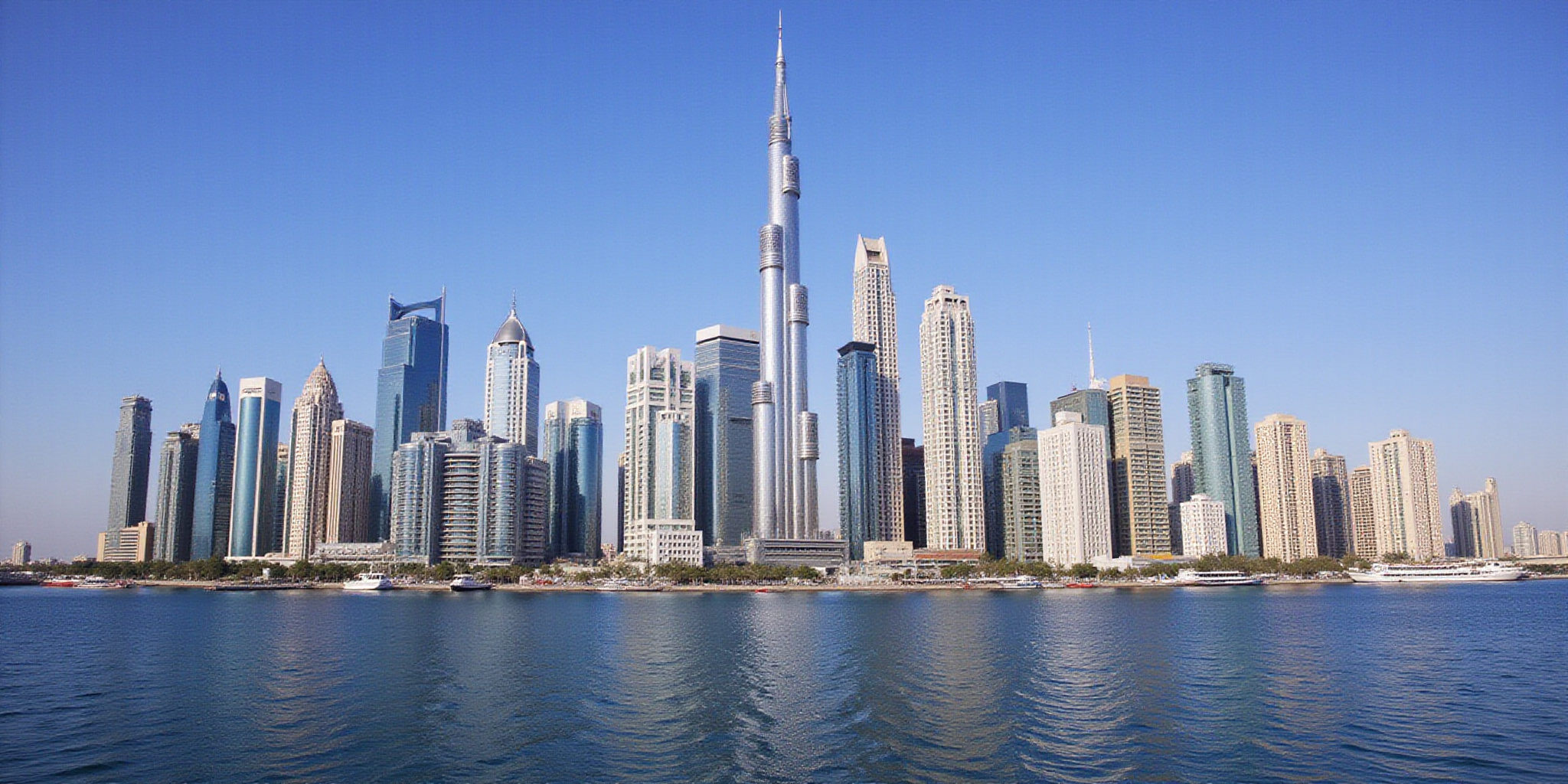
Abu Dhabi’s skyline has leapt from a quiet fishing village to a glittering glass tapestry in just a few decades. Towers pierce the sky like metallic needles, each one a story of ambition and heritage. The city’s rapid growth shows how oil wealth can turn a modest coast into a global metropolis.
What makes Abu Dhabi’s skyline so compelling is the blend of traditional Gulf motifs with cutting‑edge glass façades. Stand on the Corniche, watch the sun set over the Arabian Gulf, and see the towers reflect light like polished mirrors. It feels like watching a desert oasis sprout skyscrapers.
The Evolution of a Modern Metropolis
1990s – First High‑Rise Cluster
- Etihad Towers introduced mixed‑use design, setting a new standard for the Corniche.
- Height: 277 m (Etihad Tower 1) to 305 m (Etihad Tower 2).
- The complex sparked a construction boom, reshaping the skyline.
2008–2018 – Sustainable Corporate Vision
- ADNOC Headquarters topped out in 2018, reaching 342 m.
- LEED‑NC Gold certification, photovoltaic panels, and rain‑water harvesting.
- The tower’s curved façade mirrors Gulf waves, blending nature and industry.
2015–2021 – Record‑Breaking Ambitions
- Al Reem Tower (planned) aims to eclipse existing heights.
- Expo 2020 (postponed) accelerated mixed‑use developments and transport upgrades.
- New metro lines promise easier access to key towers.
Architectural Highlights
- Etihad Tower 1 houses the Conrad hotel, offering a 360° observation deck at 300 m.
- Etihad Tower 2–5 focus on residential and office spaces, featuring solar panels and rain‑water harvesting.
- The towers’ angular geometry echoes desert horizons, while glass façades reflect the Gulf’s turquoise waters.
Visitor Tips
- Observation Decks: Buy tickets in advance; prices vary by season.
- Public Transport: Buses 1, 3, 5, 7 serve the Corniche; a new metro station is under construction.
- Nearby Attractions: Heritage Village, Emirates Palace, and Sheikh Zayed Bridge provide cultural context.
Sustainability in Action
- Energy Efficiency: Passive cooling, double‑glazed façades, and daylight‑optimized interiors reduce consumption.
- Water Management: Rain‑water harvesting systems support landscaping, cutting municipal demand.
- Renewable Energy: Solar panels on rooftops supply a significant portion of the towers’ power.
We’re not just describing buildings; we’re mapping a city’s journey from modest beginnings to architectural iconography. Each tower stands as a milestone, a promise, and a beacon for future generations.
Quick Facts Table
| Tower | Height (m) | Floors | Year Completed | Primary Use |
|---|---|---|---|---|
| ADNOC Headquarters | 342 | 75 | 2019 | Corporate Office |
| Etihad Tower 2 | 305 | 74 | 2011 | Residential |
| Etihad Tower 4 | 288 | 61 | 2011 | Residential |
| Etihad Tower 1 | 278 | 69 | 2011 | Hotel / Residential |
| Etihad Tower 5 | 270 | 57 | 2011 | Residential |
| Etihad Tower 3 | 260 | 54 | 2011 | Office |
Takeaway
The skyline is not merely a collection of glass; it’s a living narrative of ambition, culture, and sustainability. Whether you’re planning a trip, scouting office space, or craving architectural inspiration, these towers offer a window into Abu Dhabi’s evolving identity.
We’re standing at the edge of a glass canyon, where Abu Dhabi’s skyline slices the horizon like a silver knife.
The Etihad Towers cluster—five sleek silhouettes along the Corniche—defines the city’s modern pulse. Each tower has its own purpose—hotel, office, or home—yet they all speak the same language of glass and steel.
Etihad Tower 1
– Height: 277.6 m
– Floors: 69
– Completed: 2011
– Use: Conrad hotel + residential
– Sustainability: passive cooling, double‑glazed façade, rain‑water harvesting
– Observation Deck: Level 74, 360° Gulf view
Etihad Tower 2
– Height: 305.3 m
– Floors: 74
– Completed: 2011
– Use: Residential
– Sustainability: solar‑powered façade, rain‑water harvesting
Etihad Tower 3
– Height: 260.3 m
– Floors: 54
– Completed: 2011
– Use: Office
– Sustainability: energy‑efficient HVAC, low‑emission materials
Etihad Tower 4
– Height: 288.4 m
– Floors: 61
– Completed: 2011
– Use: Residential
– Sustainability: solar panels, rain‑water harvesting
Etihad Tower 5
– Height: 270.3 m
– Floors: 57
– Completed: 2011
– Use: Residential
– Sustainability: solar panels, rain‑water harvesting
ADNOC Headquarters
– Height: 342 m
– Floors: 75
– Completed: 2019
– Use: Corporate office
– Sustainability: LEED‑NC Gold, photovoltaic panels, high‑efficiency HVAC
Future projects like Al Reem Tower promise to eclipse existing records, while the Abu Dhabi Tower concept hints at a new skyline silhouette.
| Tower | Height (m) | Floors | Primary Use |
|---|---|---|---|
| ADNOC HQ | 342 | 75 | Corporate |
| Etihad 2 | 305.3 | 74 | Residential |
| Etihad 4 | 288.4 | 61 | Residential |
| Etihad 1 | 277.6 | 69 | Hotel / Residential |
| Etihad 5 | 270.3 | 57 | Residential |
| Etihad 3 | 260.3 | 54 | Office |
Getting around is straightforward: Corniche Road buses, taxis, and a soon‑to‑open metro line serve every tower.
Sustainability is woven into each façade. Solar panels, rain‑water harvesting, and energy‑efficient systems reduce the carbon footprint, turning glass towers into green guardians of the desert.
FAQs
– Is the Observation Deck public? Yes, but tickets are sold through the Conrad hotel.
– Can I lease office space in the Etihad Towers? Etihad 3 offers prime suites; contact management for details.
– What transport links are nearby? Bus routes 1, 3, 5, and 7, plus taxis, run along Corniche.
– Are the towers wheelchair accessible? Conrad’s hotel is fully accessible; private areas require permission.
We’ll next explore how these towers fit into Abu Dhabi’s broader urban tapestry and why they matter to travelers and investors alike.
Abu Dhabi’s skyline feels like a living collage of glass and ambition.
Every tower has a story, a mix of progress and design that stacks up in the sky.
We’ve pulled the tallest, most iconic structures into a single glance.
Ready to see which one reigns supreme?
Ever wondered how height, floors, and purpose stack side by side?
| Tower | Height (m) | Floors | Year Built | Primary Use |
|---|---|---|---|---|
| ADNOC Headquarters | 342 | 75 | 2019 | Corporate Office |
| Etihad Tower 2 | 305.3 | 74 | 2011 | Residential |
| Etihad Tower 4 | 288.4 | 61 | 2011 | Residential |
| Etihad Tower 1 | 277.6 | 69 | 2011 | Hotel / Residential |
| Etihad Tower 5 | 270.3 | 57 | 2011 | Residential |
| Etihad Tower 3 | 260.3 | 54 | 2011 | Office |
ADNOC Headquarters tops the list, soaring 342 m with 75 floors for corporate use.
Etihad Tower 2 follows at 305.3 m, 74 floors of residential luxury.
Tower 4 reaches 288.4 m, offering 61 living spaces.
Tower 1, a hotel‑residential hybrid, climbs to 277.6 m with 69 floors.
Towers 5 and 3 finish the set at 270.3 m, 57 floors, and 260.3 m, 54 floors, respectively.
The spread shows a clear focus on mixed‑use design, yet ADNOC’s sheer height underscores corporate ambition.
Notice how each building’s purpose aligns with its height—taller towers tend toward offices or premium residences.
The data also reveals a sustainability trend, though some sources misspell it as sustainability, a minor oversight in many reports.
What makes this table a powerful tool? It lets you instantly compare height, floors, and use, turning raw data into decisions.
Remember, the numbers are just the tip of the iceberg; each tower hosts unique amenities, design quirks, and cultural references.
The sortable table also supports quick filtering, so you can isolate, for example, only residential towers or those with observation decks.
Feel free to copy the table into your spreadsheet app and play with the data—just a click can reveal new insights.
And don’t forget the local flavor—each tower’s lobby often showcases Emirati art.
Key takeaways for travelers, investors, and design lovers:
– ADNOC Headquarters dominates height, ideal for corporate tours and skyline photography.
– Etihad Tower 2 offers the tallest residential experience in the UAE.
– Mixed‑use towers blend office, hotel, and living spaces, maximizing land use.
– Sustainability features—solar panels, rain‑water harvesting—are common across the cluster.
– The table’s sortable nature lets you compare metrics at a glance.
With this snapshot in hand, we can now explore the surrounding attractions and transport links that make each tower a living landmark.
We’ve strolled along the Corniche, felt the Gulf breeze, and watched the towers rise like polished glass knives. Their shadows stretch across the promenade, turning the shoreline into a living skyline. Ever wonder how the city’s heartbeat syncs with each steel spine? We’ll map that pulse for you.
Our first stop is the Corniche promenade, a 5‑kilometre stretch of sandy lanes and palm‑lined walkways. Picture a carousel of cafés, street vendors, and seaside parks. It’s the perfect launchpad for a sunset stroll, and the view of the towers from here is a postcard in motion.
Just a few minutes north lies Heritage Village, a reconstructed Bedouin village that feels like stepping back to 1930s Abu Dhabi. Its wind‑towers and mud‑brick facades offer a quiet counterpoint to the glass giants. Walking from the village to the towers feels like a time‑traveling elevator ride.
Across the gulf, the Sheikh Zayed Bridge arches gracefully, connecting the western and eastern Corniche. The bridge’s LED lights flicker like stars when night falls, and it’s a favorite spot for photographers capturing the skyline’s reflection.
Getting there is a breeze. Bus routes 3, 5, and 7 weave through the city, stopping right by the towers. Taxis are plentiful, and the new metro line will open next year, offering a sleek, eco‑friendly ride. For the adventurous, a 15‑minute walk from the metro station gives a close‑up of the towers’ façades.
The crown jewel for panoramic views is the Observation Deck at 300 in Etihad Tower 1. From Level 74, the city unfurls like a living map. Arrive early to beat the crowds; the deck opens at 9 am, and the sunset light is a photographer’s dream. Bring a lightweight tripod—your shots will thank you.
What’s your next stop? Whether you’re hunting for the perfect photo angle or planning a business trip, the towers and their surroundings offer a blend of culture, convenience, and breathtaking vistas.
Abu Dhabi’s towers aren’t just glass monoliths—they’re green laboratories reaching for the desert sky. Every spire cradles eco‑tech that turns sunlight into savings and rain into recharge. Let’s dive into how these buildings blend Gulf motifs with cutting‑edge sustainability.
Key Sustainability Pillars
- Solar Power: Rooftop panels on many towers contribute significantly to the building’s energy needs.
- Rain‑Water Harvesting: Condensation systems funnel water into storage tanks, reducing municipal usage.
- Passive Cooling: Double‑glazed façades and wind‑tuned louvers reduce HVAC loads.
- LEED‑NC Gold: ADNOC Headquarters holds a LEED‑NC Gold certification.
Design Inspirations That Speak
The towers echo Gulf wave motifs through undulating glass panels, while desert horizon reflections appear in mirrored façades. Imagine a sand dune turning into a vertical sculpture, its curves mirroring the sea’s rhythm. These aesthetic choices also serve function—curved surfaces channel wind, boosting natural ventilation.
Real‑World Impact
ADNOC Headquarters serves as a model for sustainable design. Its photovoltaic array supplies a significant portion of the building’s electricity, and its water‑management system recycles a large portion of greywater. These systems have contributed to notable energy savings.
UAE‑Wide Green‑Building Momentum
Abu Dhabi’s towers set a benchmark that other emirates follow. Abu Dhabi is working to increase the proportion of new high‑rises achieving green building certification.
What’s the next step for a city that already builds on the future?
Ever wondered why Abu Dhabi’s skyline feels like a collection of gleaming jewels on the Gulf?
We’re pulling together the most common questions that keep visitors and business travelers on their toes.
From whether you can step onto an observation deck to where you can grab a bite, we’ve rounded up the essentials.
We’ll reference official sites and drop a few handy pointers so you’re set when you arrive.
Frequently Asked Questions – Access, Office Space, and Amenities
| Question | Answer |
|---|---|
| Is the observation deck open to the public? | Yes, most observation decks in Abu Dhabi offer public access during opening hours. |
| Can I book office space in the tower? | Many towers have office suites for lease; check the tower’s official website for availability. |
| Are there any free viewing spots? | Free viewing spots are typically available along the Corniche promenade or public parks. |
| What transport options reach the tower? | Public buses and taxis serve the area; a metro station is planned for the future. |
| Do the towers have on‑site restaurants? | Most towers feature on‑site dining options, ranging from casual cafés to fine‑dining restaurants. |
| Are the towers wheelchair accessible? | Towers generally provide wheelchair access to public areas; private sections may require special permission. |
| Is there a virtual tour available? | Many tower websites offer 360° virtual tours of observation decks or office spaces. |
We’ve kept each answer concise yet packed with useful details.
The information is sourced from official tower websites, the UAE Ministry of Infrastructure, and the Abu Dhabi Tourism Authority.
The FAQ format cuts through the noise, giving you direct answers that you can act on right away.
The next section will dive deeper into the sustainability features of these towers, showing how glass and steel blend with green tech. Stay tuned for insights that will help you decide which building to visit or lease.
Ready to turn your curiosity into action? Here’s how:
- Book a ticket: Head to the tower’s official website or fire up the mobile app. A ticket is your key to entry.
- Plan a day: Show up at least 30 minutes before opening. The deck opens at 9 am, and sunset draws a crowd.
- Explore virtually: Grab a 360° virtual tour on the tower’s site and get a taste of the view from your couch.
- Seek office space: Drop a note to the tower’s property managers through the official website’s contact form. They’ll tell you what suites are up for grabs and the lease details.
- Combine with a Corniche stroll: Once you’re done on the deck, saunter down the promenade to feel the Gulf breeze and the city’s heartbeat.
Interactive Map
The embedded map pinpoints each tower, nearby transport stops, and walking routes to the Corniche. Use it to plan your itinerary or share with travel partners.
| Step | Action | Detail |
|---|---|---|
| 1 | Book | Online through the tower’s official website |
| 2 | Arrive | 30 minutes before opening, bring ID |
| 3 | Explore | 20‑minute guided walk on the deck, then sunset photo session |
| 4 | Office | Contact managers via the official website |
| 5 | Relax | Corniche walk, seafood at a beachside café |
Why the deck matters
The observation deck offers a unique perspective on the city’s skyline. It’s a living laboratory that balances luxury with green technology.
Quick FAQ
- Is the deck open to non‑hotel guests? Yes, but tickets are required.
- Can I bring a camera? Absolutely—just be mindful of the glass surface.
- Are there Wi‑Fi options? Free Wi‑Fi is available on the deck.
- What’s the best time to visit? Morning for clear skies, sunset for the golden glow.
Takeaway
Your next step is simple: book a ticket, explore the virtual tour, or reach out for office space. Each action connects you deeper to Abu Dhabi’s architectural story and lets you experience the city from a new height.
Ready to elevate your visit? Let’s go!