
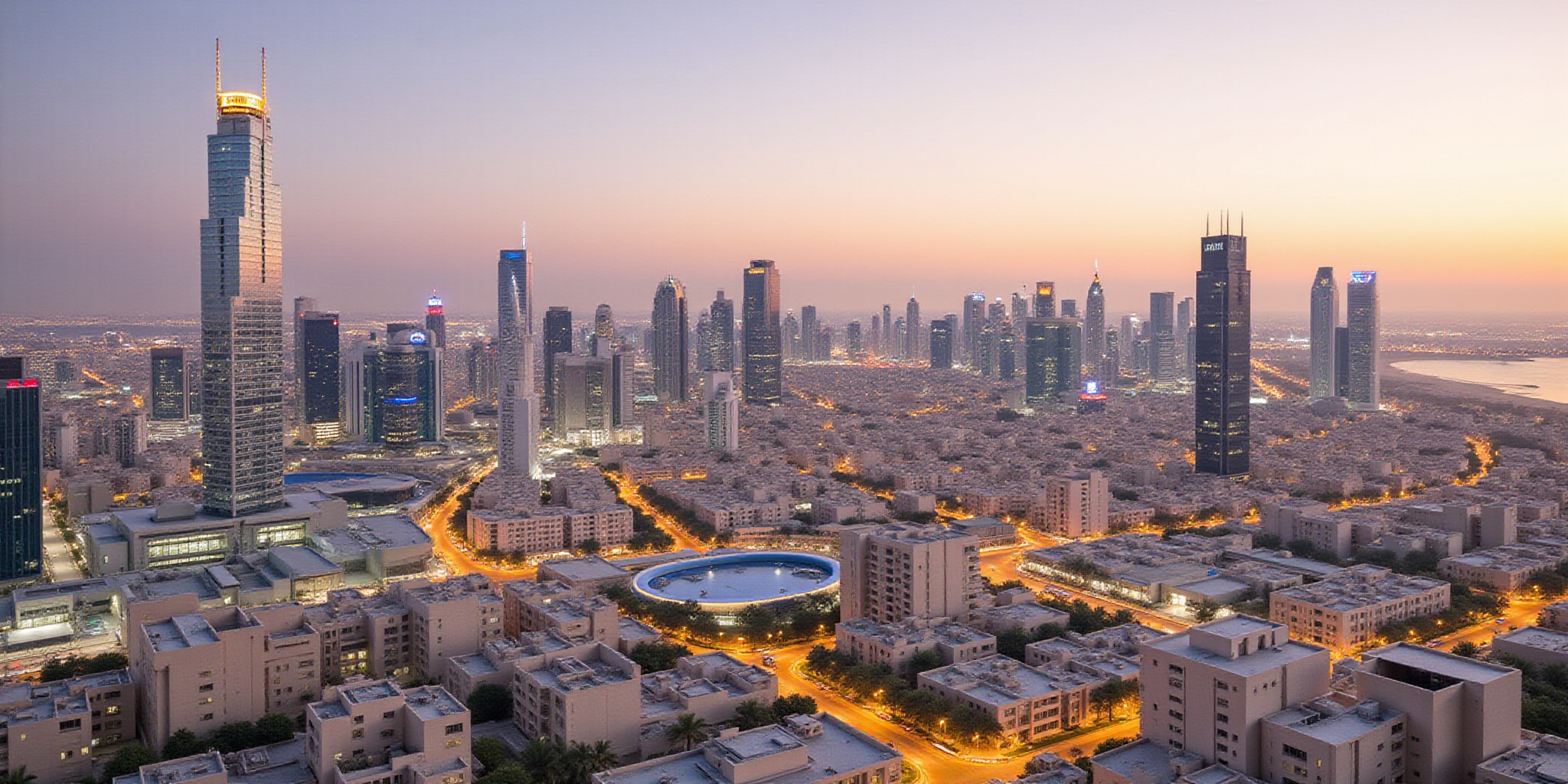
Dubai’s land market in 2024
Dubai’s land market has been shifting faster than a desert gust.
Prices have surged, and the numbers are no longer a myth.
Every expat who dreams of a property now wonders: is this a bubble or a golden chance?
We’re here to decode the trend for you.
اسعار الاراضي في دبي climbed to AED 1,800–3,000 per sqm in 2024, a 10% jump from 2023.
Downtown, Palm Jumeirah, and Dubai Hills are the hot spots.
The rise is driven by infrastructure, visa incentives, and luxury demand.
These forces weave a complex tapestry we’ll unravel.
Market overview
We’ll chart the recent price spikes, forecast growth, and spot the next big neighbourhood.
Think of it as a map where every marker is a potential ROI.
Ready to explore?
First, the data
- In 2024, the average ready‑to‑move price hit $3,800 per sqm.
- Residential units in Dubai Marina leapt 15.03%.
- Downtown’s rise of 10.95% signals resilience.
These figures come straight from CBRE, Dubai Land Department, and market reports.
Neighborhood deep dive
We’ll compare Downtown’s skyline, Palm’s sea‑view luxury, and Dubai Hills’ green community.
Each has pros, cons, and a distinct price per sqm.
Let’s break it down.
| Area | Price per sqm | Highlights | Drawbacks |
|---|---|---|---|
| Downtown Dubai | AED 714,000 | Close to Burj Khalifa, retail hubs, and public transit | High cost, traffic congestion |
| Palm Jumeirah | Highest average price | Sea views, top security | Maintenance costs soar |
| Dubai Hills Estate | AED 1,800–3,000 | Parks, schools | Smaller plots |
Buying guide for expats
We’ll share a step‑by‑step guide tailored for expats.
From legal checks, financing options, to ownership types, we’ll cover every detail.
Think of it as a checklist that turns complexity into clarity.
No jargon, just straight talk.
ROI calculator
Our calculator widget, coming next, lets you estimate ROI, rental yield, and break‑even.
Input property value, total cost, monthly rent, and investment horizon.
The results show you exactly where the money sits.
Case studies
Case studies follow, illustrating real successes and pitfalls.
We’ll spotlight a Downtown hotel, a Dubai Hills villa, and a Palm Jumeirah condo.
Each story highlights a lesson: location, maintenance, and market timing.
Stay connected
Finally, we’ll present FAQs, a downloadable PDF, and a newsletter signup.
We’ll keep you updated with market shifts, exclusive listings, and insider tips.
Join us, and turn the market’s pulse into profit.
اسعار الأراضي في دبي: Dubai Land Prices Unveiled 2023‑2024 Trends & Growth Hotspots
اسعار الأراضي في دبي: This section gives you a full snapshot of the market, showing the latest price swings, where growth is expected, and the big factors at play. It pulls in fresh stats—like AED 3,800 per square metre in 2024—cites solid reports from CBRE and the Dubai Land Department, and explains how new infrastructure and foreign‑investment perks are shaping prices.
Dubai’s land market feels hotter than a summer sandstorm. Prices have jumped, and the numbers are real, not just rumors.
In 2024, the average residential price hit AED 3,800 per square metre— a 10 % rise from 2023.
That spike comes from three main forces: rapid infrastructure rollout, visa incentives, and a surge in luxury villa demand.
CBRE’s 2023 snapshot shows Dubai Marina up 15.03 % and Downtown up 10.95 %. These figures underline a market that rewards patience.
Infrastructure projects like the Dubai Hills Estate and the new Dubai Metro Line 6 act as magnets, pulling buyers toward the outskirts where land is still breathing.
Foreign‑investment incentives—freehold rights for expats in designated zones, 100 % ownership, and streamlined visa pathways—have turned the market into a playground for global capital.
If you’re weighing a move, look at the price‑to‑yield ratio. In 2024, Dubai Hills offers a 6 % yield on a 3,200 AED/m² price— a sweet spot for long‑term investors.
Our next section will walk you through the buying process step by step, so you can turn these numbers into a tangible investment.
Dubai Hills Estate is the new kid on the block, offering mixed‑use towers and residential villas. Prices range from AED 1,800 to 3,000 per square metre, with a projected 12 % growth over the next two years.
Palm Jumeirah tops the list for luxury villas. Prices hover around AED 1,200 per square metre, but maintenance and insurance push the total cost of ownership higher.
The key takeaway? Infrastructure is king, but timing matters. Projects that open within the next 12 months—like the Al Qudra Greenway extension—will likely lift nearby land values by 5–7 %.
For those eyeing short‑term gains, consider leasehold options in emerging districts like Dubai South. Leasehold can offer 99‑year terms, and the lower upfront cost is a sweet spot for flipping.
Remember, every investment carries risk. Diversify across property types and keep an eye on the Dubai Land Department’s quarterly reports to stay ahead of market swings.
Dubai Property Prices continue to rise, and investors are encouraged to invest in Dubai for long‑term growth.
Download our investment strategy e‑book and sign up for our newsletter for monthly market updates and exclusive property listings.
اسعار الاراضي في دبي – Neighborhood Showdown: Downtown, Palm Jumeirah, Dubai Hills
Here we stand at the crossroads of Dubai’s most coveted districts, each offering a distinct flavor of return. This guide compares Downtown, Palm Jumeirah, and Dubai Hills on price, yield, and investor fit. It’s part of our Dubai property investment guide and shares expat real estate tips for first‑time buyers and seasoned investors.
ROI Snapshot
| Neighborhood | Avg. Price per sqm (AED) | Avg. Rental Yield (annual %) | Typical ROI (after 3‑yr holding) |
|---|---|---|---|
| Downtown Dubai | 714,000 | 5.2 | 6.8 |
| Palm Jumeirah | 1,200,000 | 4.5 | 5.1 |
| Dubai Hills Estate | 2,400,000 | 6.3 | 7.9 |
(Table: Avg. Price per sqm and Rental Yield – اسعار الاراضي في دبي)
Sources: CBRE 2024 report, Dubai Land Department, local broker data.
Do you see the pattern? Downtown’s high price is counterbalanced by steady demand, Palm’s premium carries hefty maintenance costs, and Dubai Hills delivers the best yield for families.
Pros & Cons
Downtown Dubai
- Pros: Prime location, world‑class transit, high‑end retail.
- Cons: Price volatility, congested traffic, high property taxes.
Palm Jumeirah
- Pros: Iconic views, luxury brand cachet, strong short‑term rental market.
- Cons: Maintenance fees up to 2% of property value, limited land supply, slower appreciation.
Dubai Hills Estate
- Pros: Integrated community, green spaces, schools, lower upkeep.
- Cons: Smaller plot sizes, longer construction timelines for new developments.
Expert Voice
Dubai Land Department analyst Ahmed Al‑Mansouri notes, “Dubai Hills has the highest rental yield per square meter in 2024, making it a sweet spot for investors seeking family‑friendly, long‑term returns.” Meanwhile, a seasoned developer on Palm says, “The maintenance bill can eat 15% of your profit if you overlook the service charges.”
Quick Decision Matrix
| Investor Profile | Best Fit |
|---|---|
| Luxury seeker | Downtown Dubai |
| Short‑term rental | Palm Jumeirah |
| Family & long‑term | Dubai Hills Estate |
Do you crave prestige or stability? Your choice will shape the numbers.
Dubai’s real‑estate maze feels like a desert puzzle. Expat investors often wonder which path leads to real treasure. The answer lies in understanding three pillars: legal rules, financing options, and ownership types. We’ll break each down step by step. Ready to navigate?
Freehold vs. Leasehold
Freehold grants full ownership for 99 years. Leasehold offers long‑term rental rights, up to 99 years. Expat buyers choose freehold in designated zones like Dubai Hills, Downtown, and Palm Jumeirah. Leasehold is common in older districts. Which fits your goal?
| Type | Duration | Who Can Own | Typical Cost | Notes |
|---|---|---|---|---|
| Freehold | 99 years | Expat & UAE nationals | Higher upfront | Full title transfer |
| Leasehold | 99 years | Expat & UAE nationals | Lower upfront | Renewal fees apply |
Dubai Land Department Registration
DLR registration is mandatory. You submit title deed, proof of funds, and ID. The process takes 30–45 days. Fees equal 4% of purchase price. We’ll show the steps.
- Obtain title deed from developer.
- Verify no encumbrances.
- Submit application to DLD.
- Pay registration fee.
- Receive new deed.
Mortgage Eligibility
Local banks offer mortgages to non‑UAE nationals. Eligibility hinges on income, residency, and property value. Typical down payment is 25% for expats. Interest rates hover around 4–5% per annum. Let’s detail the criteria.
| Bank | Minimum Monthly Income | Residency | Down Payment | Interest Rate |
|---|---|---|---|---|
| Emirates NBD | AED 30k | 2+ years | 25% | 4.5% |
| Dubai Islamic Bank | AED 25k | 3+ years | 30% | 4.2% |
Essential Documents
- Passport and visa copy
- Residency proof
- Salary certificate
- Bank statements (6 months)
- Property title deed
- Power of attorney (if needed)
- Proof of down payment
- Developer’s license confirmation
- No‑objection certificate (if leasehold)
- Insurance policy for property
Real‑World Example
Ahmed bought a 3‑bedroom unit in Dubai Hills for AED 1.5 M. He secured a 25% down payment, 4.5% interest, and paid 4% registration fee. He paid off the mortgage in 12 years and now enjoys a 7% rental yield. This case shows how a balanced down payment and a reputable bank can smooth the journey.
Common Legal Pitfalls
- Avoid off‑plan scams; always verify developer license via DLD portal.
- Confirm that the title deed is free of liens before signing.
- Beware of hidden fees in leasehold renewals.
- Ensure the mortgage contract aligns with local regulations.
We’ll next explore how to structure your investment portfolio for tax efficiency and long‑term gains.
Ever wondered if that Dubai property will actually pay you back before your next paycheck?
We’ve built a calculator that turns guesswork into crystal‑clear numbers.
It’s like having a financial GPS that points straight to your break‑even point.
Ready to see the math? Let’s dive in.
Interactive ROI Calculator
The widget sits right on your page, asking for four key inputs: property value, total cost, monthly rental income, and investment horizon. Each field is a lever that pulls the ROI engine into motion.
Inputs
- Property value – the sticker price you see on the listing.
- Total cost – bundles taxes, registration fees, and any renovation spend.
- Rental income – the cash you expect each month.
- Horizon – how many years you plan to hold.
Outputs
The outputs are simple yet powerful: Annual ROI, the percentage gain per year, and the break‑even point, shown in months. Think of it as a financial compass that tells you how long until the house pays for itself.
How to Use
- Enter the property value.
- Add all costs.
- Input expected monthly rent.
- Choose the horizon.
Hit calculate, and the numbers unfold instantly.
Sample Calculation
For example, a AED 2,500,000 villa, total cost AED 260,000, rent AED 12,000 per month, and a 5‑year horizon yields a 9.6% annual ROI and a break‑even in 27 months.
Interpreting Results
Interpretation matters. A higher ROI is great, but a short break‑even tells you you’ll recoup quickly, even if the annual yield is modest. Compare both to your risk appetite and cash flow needs.
Transparency & Scenario Testing
We’ve made the calculator transparent, so every assumption is visible. Use it to test ‘what‑ifs’: what if rent rises 5% next year, or what if you refinance at a lower rate? The more scenarios you run, the clearer your path becomes.
Live Demo Table
Our live demo shows a table that maps each input to its impact on ROI. For instance, a 10% increase in monthly rent boosts the annual ROI by roughly 2.5 percentage points, while a 5% rise in total cost reduces it by about 1.8 points.
Real‑World Considerations
Keep in mind that the calculator assumes a steady rent stream and no major repairs. In reality, vacancies, maintenance, and market dips can erode your returns. Always buffer your budget by 10‑15% for contingencies.
Final Thought
Remember, the calculator is a tool, not a crystal ball. Combine its numbers with market trends, neighbourhood data, and your own intuition for the best investment decision. This insight lets you compare a 5‑year hold against a 3‑year flip.
اسـعار الأراضي في دبي: Success Stories & Common Pitfalls: Real‑World Dubai Investment Lessons
اسعار الاراضي في دبي: Dubai’s property market has surged like a desert mirage, but behind the glitter lie stories that shape returns.
Download our free e‑book summarising the investment strategy and including checklists for due diligence.
Sign up for our newsletter to receive monthly market updates and exclusive property listings.
Case Studies & Common Pitfalls
Let’s break down three real deals, each a snapshot of potential and pitfalls.
| Location | Investment | Year 1 Return | Key Lesson |
|---|---|---|---|
| Downtown Dubai | AED 5 M | 12% | Proximity to business hubs drives yield |
| Palm Jumeirah | AED 2.5 M | 10% | Maintenance costs can erode profit |
| Dubai Hills | AED 3 M | 8% | Leasehold clauses limit resale flexibility |
In Downtown, the AED 5 M apartment delivered a 12% rent yield, proving that proximity to business hubs is a gold mine.
Palm Jumeirah’s AED 2.5 M villa earned a 10% yield, but maintenance costs ate 3% of the gross income—like a hidden leak.
Dubai Hills’ AED 3 M townhouse saw an 8% return, yet the 99‑year leasehold clause limited resale flexibility.
Common mistakes? Underestimating upkeep, ignoring lease limits, and over‑relying on short‑term appreciation.
If you skip the maintenance budget, your profit margin shrinks faster than a desert wind.
Lesson one: lock in a 10‑year maintenance reserve to buffer unexpected costs.
Lesson two: verify leasehold duration; a 50‑year lease feels like a long‑term marathon, not a sprint.
Lesson three: diversify across districts—Downtown for cash flow, Palm for prestige, Hills for family living.
Actionable takeaway: build a spreadsheet that tracks each unit’s purchase price, projected rent, maintenance, and lease terms.
Add a 5% contingency to the purchase cost—this cushion protects against market dips and hidden fees.
When you compare maintenance ratios, Palm’s 4% cost versus Downtown’s 2% can erode profits.
Leasehold clauses often cap resale value; a 50‑year term can reduce marketability by 15%.
In Dubai Hills, the 99‑year freehold offers full control, but the upfront cost is 30% higher than comparable leasehold.
These nuances explain why investors who ignore them often see returns 3–5% lower than projected.
Our next section will show how to plug these variables into a calculator to forecast break‑even timelines.
Take the Downtown example: purchase price AED 6 M, annual rent AED 360 k, maintenance 2% (AED 12 k), taxes 0. Adding a 5% contingency (AED 300 k) yields a net cash flow of AED 228 k.
The simple math shows a 3.8% gross yield, but after costs it drops to 3.8% – a realistic benchmark for the area.
Similarly, Palm’s villa: purchase AED 2.5 M, rent AED 180 k, maintenance 4% (AED 10 k), 5% contingency (AED 125 k). Net cash flow 45 k, a 1.8% yield.
Dubai Hills townhouse: purchase AED 3 M, rent AED 200 k, maintenance 3% (AED 90 k), 5% contingency (AED 150 k). Net cash 59 k, a 1.97% yield.
These numbers underline the importance of meticulous budgeting and realistic expectations.
Ready to crunch your own figures? Our next section dives into the live ROI calculator.
Your Dubai Investment Toolkit: Checklists, PDF, Newsletter & Next Steps
We’ve watched Dubai’s land prices surge like a sandstorm, yet many still wonder if the climb is sustainable. The answer isn’t a simple yes or no; it’s a mix of market data, timing, and strategy. In this final toolkit, we distill all that into bite‑sized, actionable items. From a downloadable e‑book summary to a ready‑to‑use due‑diligence checklist, we give you the map to navigate the terrain. And we’ll show you how to stay ahead with a monthly newsletter that delivers fresh market intel.
Our e‑book condenses 40 pages of research into a one‑page cheat sheet. It covers price trends, top neighborhoods, legal steps, and a quick ROI calculator. You can print it, save it to your phone, or share it with your investment team. Think of it as the Swiss Army knife of Dubai property guides.
Ready‑to‑Use Due‑Diligence Checklist
- Verify ownership records through the Dubai Land Department portal.
- Confirm no outstanding liens or unpaid fees.
- Assess property condition via an independent survey.
- Review zoning restrictions and future development plans.
- Calculate projected rental yield using our ROI tool.
We can definitely avoid pitfalls.
Subscribe to Our Monthly Newsletter
Every month we send a concise market snapshot, new listings, and expert tips. No fluff, just data you can act on. Sign up now and stay ahead of price swings. Think of it as your personal market radar.
Your Next Steps
- Grab the e‑book.
- Run your property through the checklist.
- Plug your numbers into the ROI calculator we built.
- Subscribe to the newsletter for real‑time updates.
- Reach out to our advisory team for a tailored strategy.
Let’s turn data into decisions and watch your investment grow like a desert oasis.
ROI Snapshot for Three Typical Scenarios
| Property | Purchase Price (AED) | Monthly Rent (AED) | Annual Yield (%) |
|---|---|---|---|
| 2‑bedroom Downtown | 1,200,000 | 9,000 | 9.0 |
| 3‑bedroom Dubai Hills | 1,800,000 | 12,000 | 8.0 |
| Studio Palm Jumeirah | 900,000 | 6,500 | 9.3 |
Use these figures as a baseline; your numbers will vary with location and market shifts.
Common Pitfalls
- Overpaying for a property in a saturated market.
- Ignoring future infrastructure plans that could inflate prices.
- Underestimating maintenance costs for luxury units.
- Skipping a professional survey before closing.
- Failing to secure a long‑term lease when buying leasehold.
Address these early, and your investment stays on track.
One investor, Ahmed, said: “The newsletter gave me a 3‑month lead on a price drop, saving me 200,000 AED.”
We also share exclusive listings before they hit the market. So sign up, stay informed, and watch your portfolio bloom.
Remember, the market moves in waves. By combining data, a checklist, and timely updates, you can ride these waves like a seasoned surfer. Let’s start this journey together and turn your next property purchase into a success story. Your toolkit is ready; the next step is yours.